











AI has stopped being a side project – it’s rewriting the rules of how professional services businesses operate – and – stay competitive.
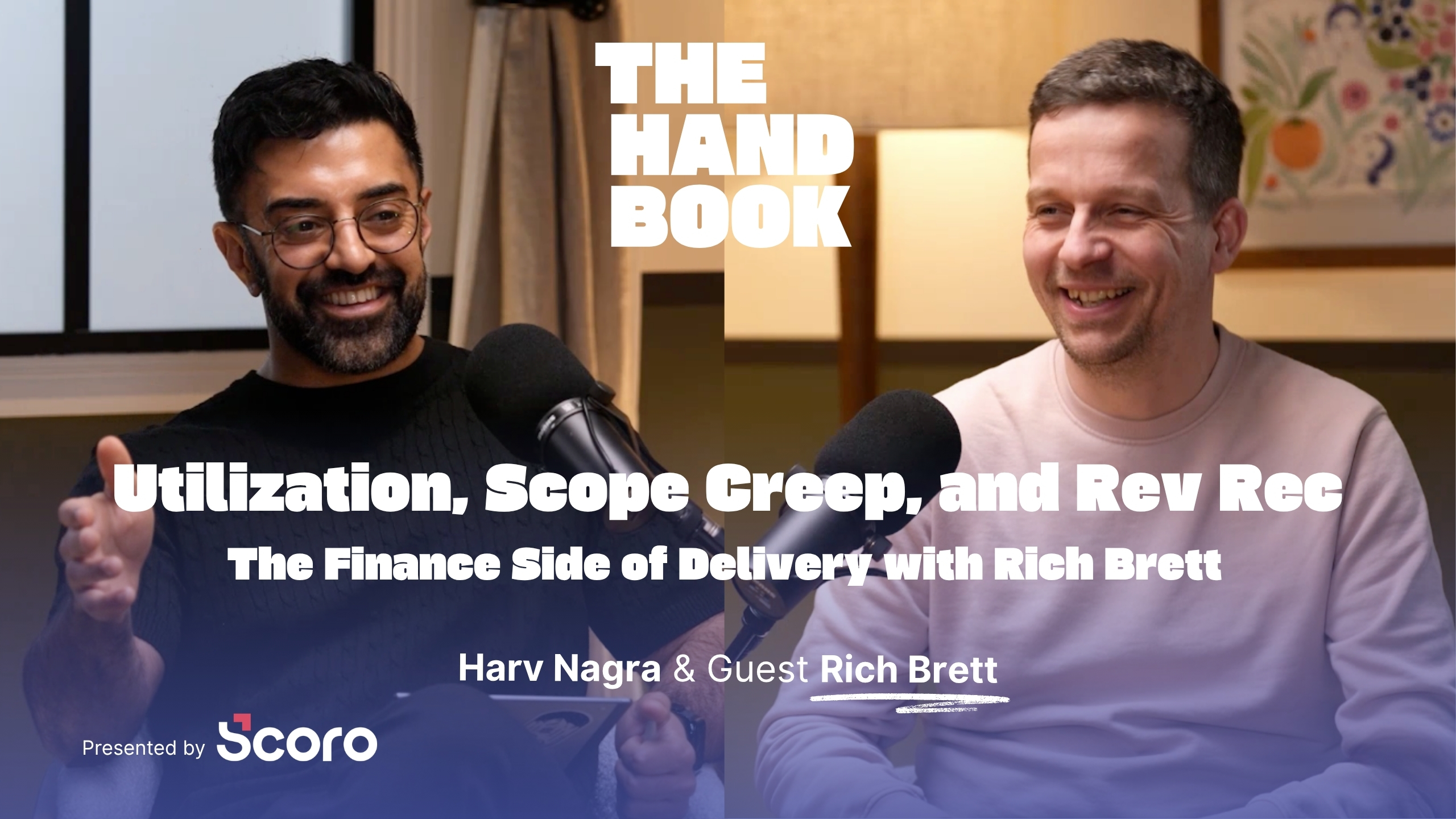
Luke Alexander, Chief Digital & AI Officer at Four, has led an ambitious AI transformation in his business. From rolling out Microsoft Copilot across 300+ staff to launching client-facing AI services, Luke’s approach to embedding AI is bold, practical, and refreshingly human.
In this episode, Luke and Harv unpack what it really takes to move from AI experiments to AI integration – and the leadership, structure, and mindset that make it work.
Here’s what we get into:
• How Four operationalized AI across teams (and why fluency beats training)
• The three categories of AI value – assistive, automated, and transformative
• Why senior leadership buy-in is the single biggest success factor
• How to overcome the “AI shame” still holding some teams back
• The impact of AI on agency structures, staffing, and the future of junior roles
If you’re still just experimenting with AI – but haven’t figured out how to truly embed it into the way you operate, this episode shows what that next stage looks like in practice — and what it demands from leadership.
Additional Resources:
👉🏽 Follow Luke on LinkedIn
💡 Check out Four’s website
👨🏽 Follow Harv on LinkedIn.
📈 Measure your business maturity and find out how to get to the next level: https://bit.ly/assess-business-maturity
📬 Stay up to date with regular ops insights. Subscribe to The Handbook: The Operations Newsletter.
Transcript
Harv Nagra: [00:00:00] Hey everyone. It’s Harv. It’s that time of year again, annual planning season. Every team’s trying to map out next year, but the thing is, most businesses still treat that process like a spreadsheet exercise.
Harv Nagra: Finance builds the numbers.
Harv Nagra: Everyone else kind of nods along because they don’t have their head around it and maybe don’t even understand its significance. The point of this exercise isn’t to tick a box or produce a P&L statement that gets filed away until next Autumn. It should be a living system, one that helps you make better decisions month to month, brings finance and operations together, and connects the numbers to what’s actually happening across the business. This week I’m joined by Adam Cooper, a fractional CFO and podcast host who’s helped hundreds of agencies and consultancies use finance as their sat nav, not their rear view mirror.
Harv Nagra: If you’re heading into planning season, this episode will hopefully change the way you see it and how you approach it. Thanks for listening to the Handbook. This episode [00:01:00] is brought to you by Scoro, and shout out to them for supporting my new project with The Handbook, the Business Maturity Quiz. Here’s why this matters. Most service businesses grow without a clear benchmark.
Harv Nagra: You feel busy, maybe even successful, but without something to measure against, you don’t actually know if you’re set up to scale. That’s where the quiz I’ve designed comes in. In three minutes, you’ll see where you stand across five key pillars, people, process, tech, data and growth. More importantly, you’ll get tailored advice on what to focus on next to level Up. Most service businesses, including agencies and consultancies, stall at level one or two. Only 5% ever reach the top, level five. So where do you think you sit? Find out now at bit.ly/assess-business-maturity.
Harv Nagra: Once again, that’s [00:02:00] bit.ly/assess-business-maturity. I’ll include a link in the episode notes. Now? Let’s get to the podcast.
Harv Nagra: Hey all. One of the things I keep hearing from ops leaders is the sense of unease around ai. On the one hand, everyone knows it’s important. It’s the topic in every boardroom and every client conversation. On the other hand, a lot of folks are still just dabbling. A few ChatGPT prompts here. Teams and individuals using an array of tools here and there, but often nothing that feels truly embedded in the way the business runs. That tension is understandable. Rolling out new tools at scale has never been easy. There’s dozens of new AI tools cropping up every month, and when those tools threaten to change the very services you sell or the roles your people do, the stakes feel even higher.
Harv Nagra: Which brings us to today’s guest, Luke Alexander is Chief Digital and AI Officer at Four, an independent marketing media [00:03:00] and communications agency, where he’s leading one of the most ambitious AI transformations I’ve ever seen in the sector.
Harv Nagra: Luke first joined Four through their graduate scheme back in 2006, and later moved into a public sector role with London Legacy Development Corporation, where he worked on turning the London 2012 Olympics into a lasting legacy for the city. After that, he launched his own technology consultancy, Marmelo, deliberately designed to stay small and focused on solving difficult technology problems. But in 2021, he sold that consultancy back to Four, bringing him full circle to where his career started. Now at Four, he’s in a very different role spearheading their AI and digital transformation. His leadership has already been recognized in the BIMA 100, honoring the UK’s most influential digital leaders. I am so excited for you to hear today’s conversation. Let’s get into it.
Harv Nagra: Luke, welcome to the podcast. Pleasure to have you here today.[00:04:00]
Luke Alexander: Thanks so much for having me. It’s delightful to be here.
Harv Nagra: Um, so you are a Chief Digital and AI officer at Four. I’d love to start with the understanding of what that role entails.
Luke Alexander: Yeah, absolutely. So it’s a bit of a mouthful, isn’t it? But it, it, it’s a new role. It’s something quite exciting for us as a business because, you know, we are a marketing communications and media agency, so we are, we are predominantly client faced, stepping away from that and looking at ourselves, looking at how we apply AI to our own business operationally, how we can help our clients overcome operational hurdles they have around using ai.
Luke Alexander: So it’s a very new, very exciting thing. And certainly like my background is in digital, but it’s also in comms. I wear a lot of hats and I’m finding that all of those hats are coming into, in, into use in this role as well. So I’ve been doing it about two years. I say it’s new, two years has flown by in this world of
Harv Nagra: Mm-hmm.
Luke Alexander: but I guess the, the role is, you know. Building the agency in the future, right? Transforming our business, transforming, what we do using AI as a [00:05:00] kind of catalyst for change.
Harv Nagra: When we spoke previously, I was surprised to hear that you have four full-time people focused on AI work at Four.
Harv Nagra: That sounds like a lot. And, you know, apart from ChatGPT lot of agencies and consultancies are still just dabbling, with AI and just people sporadically using tools that they come across. and secondly, the, the other thing that came to mind is that, agency and consultancy leaders of often have a lot of anxiety around hiring non-billable roles.
Harv Nagra: So, you know, hearing four individuals dedicated to AI at Four, that was, yeah, super surprising and impressive. So tell us a bit about why and what those individuals do.
Luke Alexander: So I mean. Hundred percent. You know, if I was listening to this podcast, I, I would be wondering what, what we do as well, and, and whether it’s paid off, You know, whether it’s been worth the investment. So what we’ve found is that, you know, on a day-to-day basis, people talk about ai, like it automatically saves you time. It [00:06:00] automatically, you just use AI and it will, will somehow shave some time
Harv Nagra: Mm-hmm.
Luke Alexander: shortcut. That’s not really how organizations work.
Luke Alexander: And it’s certainly not how individual workflows work. So if you have someone who could save 15 minutes a day, right, on a particular task, but it’s 15 minutes. It’s not a massive issue for them to do it. It’s a pain. But you know, actually working out. Will AI solve it? How to use AI to solve it? Am I doing it properly?
Luke Alexander: That’s many hours of work, and if you don’t have any expert help, it’s, it’s potentially impossible for you to really know whether you’re doing it
Luke Alexander: right So to achieve any sort of productivity gains in the scale that we think agencies like are going to need to see in the coming years, coming months, you need that center as also it’s a kind of centre of excellence role.
Luke Alexander: which is not to say that we are not, part billable as well, by the way. I mean, we do quite a lot of work helping clients, do the same thing and, and that’s, you know, increasingly important part. But without a central support, without a centre of [00:07:00] excellence, it’s so
Luke Alexander: hard for businesses, organizational teams to keep up with the pace of change.
Luke Alexander: So it, it, it’s unfortunately just the price of doing business. You know, if you want to see significant change and growth, you have to make that, like an investment, an important part of what you are doing centrally.
Harv Nagra: Absolutely.
Luke Alexander: And it is an expert role at the moment.
Harv Nagra: Yeah. That, that is really, really impressive. And, and I think it sets, sets a benchmark. I was having a conversation, I think just the other week where, you know, people were talking about, time being taken away from kind of delivery roles to do some experimentation and, and what that means for utilization and all that kind of stuff.
Harv Nagra: And this is a really interesting approach that, your, your team’s taken at Four.
Luke Alexander: Absolutely. And you know, I’ve got some incredibly intelligent, like creative colleagues, but it’s unfair to expect them to suddenly turn around and say, I’m gonna spend three hours today away from all the stuff I’m supposed to
Luke Alexander: doing to like, try something that might not work. And if we can take [00:08:00] that away from them and say, we’ve tried this, we’ve tried this, we’ve tried this, maybe this is a nice route to go down. Suddenly they become super creative about how they use ai. and it gives them certainty. You know, I’ve always said from a, from a central point of view, the one most important thing you can give do you owe to your employees is clarity around ai.
Luke Alexander: Because it’s such an unclear landscape. That means they know what’s allowed, they know what’s not allowed, but also they know that within those confines, there’s freedom to experiment. You give them permission, you give them the space to experiment, and that that pays massive dividends.
Harv Nagra: Mm-hmm.
Luke Alexander: yeah.
Luke Alexander: No, it’s hugely important.
Harv Nagra: So, you know, you were giving the example of inefficiencies that need to be sorted, and maybe that’s something these individuals are, are in your team looking at, you know, better ways of working, and, and stuff like that for the business operations, are they also looking at creative outputs and that kind of use of ai? Is that also part of the remit?
Luke Alexander: Yeah, absolutely. So everything, I mean, I see, I, I see AI [00:09:00] use the spitting into kind of three buckets.
Harv Nagra: Hmm
Luke Alexander: are incrementally useful. So you’ve got what most people think of, which is like assist the assistive uses. That’s, you know, maybe you go to ChatGPT for some advice, you throw some ideas around, you know, it’s very valuable.
Luke Alexander: But it, but it is assistive. You’re still doing the job, you’re still making it happen. There’s the automation, which a lot of people see is like the holy grail. we won’t need a, a full-time person to do this
Harv Nagra: mm-hmm.
Luke Alexander: you know, we can have them doing more important stuff. And that’s fantastic too. But it’s still, still just, you know, the same thing that your organization’s been doing.
Luke Alexander: Maybe it’s faster, maybe it’s high quality, whatever. The third bucket, which is where all the, my mind, like real value sits, is in transformation. And that’s when you take a step back and you say, pretend we just started this business
Harv Nagra: Mm-hmm.
Luke Alexander: Like, what would we be doing? How would we, how would we start it?
Luke Alexander: Who would we have? What kind of roles would they be doing? Where would we use ai? And suddenly you get all these amazing outputs from it. So in terms of like creative outputs and what we give to our clients, you know. [00:10:00] It’s really important that we are delivering them work that is future-proof and future looking, not just because of margins and because of productivity and because of X, Y, Z, but because, you know, we wanna be delivering things that have genuine value in it, in what will be probably a very new, unusual marketplace. so yeah. Yeah. No, I, it it’s completely universal across the business. It’s the way we work.
Harv Nagra: So from what I understand, being so tech forward wasn’t always the case at Four. That’s what you’re telling me. Can you, for our listeners tell us what the situation was like a few years ago and why this changed so quickly?
Luke Alexander: Yeah, yeah. I mean, I should say, in defense of my amazing colleagues in like performance marketing, we’ve had pockets of absolute technical genius, you know, solutions. being know core operationally, you know, we were on premises. we had, you know, it. It was fine. It worked fine, but it was not super future looking. So we were actually in a situation which was quite unusual, which meant that [00:11:00] when we were switching on a lot of our AI tools like copilot, we were also doing a massive change over to, you know, to cloud-based file systems, all that kind of
Harv Nagra: Mm-hmm.
Luke Alexander: And it was really quite useful. It’s interesting ’cause a lot of the organizations I work with are, are doing things more incrementally. there’s a real benefit to a big change and giving you that momentum, particularly now, because you can’t stop with ai. You can’t stand back and take a breath. You can’t say, let’s give it six months and see how it happens. You know, you do genuinely have to like, keep momentum going. So it was quite nice to have that push and then keep running rather than stop and start, stop and start, stop and start.
Luke Alexander: But, but yeah, it’s been a, been a busy two years for us, for sure.
Harv Nagra: That, that is exciting. And I think there is this kind of momentum and, feeling that you get that this is a really kind of innovative place when you’re just leaning into that, that change and that transformation. So yeah, I can see the benefits. So, today I’m keen to hear what the rest of us can learn [00:12:00] from your journey.
Harv Nagra: can you tell us a bit about the AI tools or methodologies in play at Four, and then I’d love to hear how you operationalize those, taking them from just experiments. of course you mentioned that you’ve got your AI team, but taking them from experiments into kind of business as usual.
Luke Alexander: Yeah, there’s a couple of levels on which we do this. So, I’ll start with the kind of business as usual stuff. So start with the, what the, the kind of approach we’re taking, which is around AI fluency. So we found when we start rolling out, so we have co-pilot available to all our
Harv Nagra: Mm-hmm.
Luke Alexander: we have for over a year now. since it was possible actually to, to, to, to put it live. So we’ve had it available for everyone. knew that it wouldn’t just get adopted by default, and we planned for a huge amount of training, which I think makes
Harv Nagra: Mm-hmm.
Luke Alexander: What we have discovered though is that the training is great, but it only gets you so far as, I think, you know, I mentioned earlier the, the handholding we, we, we call it [00:13:00] coaching, but the sort of really helping people understand. What is actually going on, what this exciting new technology actually does, like how it works. It doesn’t mean everyone has to become like a machine learning engineer, but like everyone has to have a sense of what, what’s different, right? It’s not like Word and Excel. It’s not a, a simple tool that you can learn to use it.
Luke Alexander: It’s quite, quite nuanced, I guess. So we have this AI fluency approach where we’ve really taken people, we’ve helped them identify use cases, and I think a lot of the terminology around AI puts people off, like use cases, gets talked about a lot. And it’s a, it basically means things that you could make
Harv Nagra: Mm-hmm.
Luke Alexander: pain points that in your current organization there’s loads of frameworks. Christopher Penn from Trust Insights, who’s well worth looking up if you haven’t encountered him. He’s, got his TRIPS framework and as, as a way of identifying which use case to go for. But fundamentally, if you ask people. What are the things about your job in your particular interaction with your customers or your [00:14:00] internal customers, or you know, the people you relate to, your stakeholders, what are the pain points?
Luke Alexander: You’ll quickly come up with a massive list of things that, that you can apply AI to. That’s been a bit of a learning in terms of, you know, we knew it wasn’t just, you know, give it to them and they’ll
Harv Nagra: Mm-hmm.
Luke Alexander: We knew, we thought, we thought the training piece would be enough, but it has required us to adopt that kind of AI fluency approach.
Luke Alexander: So that’s on things like, you know, using it for, you know, speeding up workflows, using it for first draft of things, using it for like content creation. All those things required, like a bit of trial and error, bit of going back and forward.
Harv Nagra: Mm.
Luke Alexander: Then there’s, on the other end, there’s the tools that we built.
Luke Alexander: So these are specific things where we’ve centrally recognized that something is possible, but, but can’t be done. By the people using the tools that the, the day-to-day tools that we have. So we have within our team the capability to, to do some, essentially just little, little coding projects [00:15:00] that get us from, you know, where we need to be to a new tool.
Luke Alexander: So, for example, we had a, a localization project really, where we had a, a really good set of strategies around, media buying for a particular client. I can’t name ’em unfortunately. we had a particular set of strategies that worked really well. and we were working across about 120 different territories. We had all these amazing insights for people around the business who knew these territories Inside out, we have all these resources we could go to, databases, things like that. Combining all of those things and turning it into a per territory playbook was. Just beyond the capabilities of the tools that everyone had access to. So recognizing that, pulling it into a central thing, running a quick pilot to make sure it worked, testing it, and the outputs a tiny horizon, right? We’re talking like three or Four days from start to finish. That kind of project works really well where I’ve seen people fall apart. Definitely, like some of the organizations I work
Harv Nagra: Mm-hmm.
Luke Alexander: to know about their own, you know, [00:16:00] it’s a traditional approach from an IT point of view, for example, is to sit, you know, you’re talking three months, four months, whatever.
Luke Alexander: And the piloting is a lot more around definable outputs, around a definable test plan, of which is very admirable. But with AI use actually, it’s, it’s real, real proof of concept
Harv Nagra: Mm-hmm.
Luke Alexander: it work? Can it be work? How can we, and to do that you do need a sort of, a very agile, with a small a, not a big a
Harv Nagra: Yeah.
Luke Alexander: that actually work.
Luke Alexander: I think.
Harv Nagra: Mm-hmm. I, I think those larger projects end up getting quite bogged down and, and they become quite, I, I can’t think of a better word right now other than just nightmarish too. ’cause, ’cause you’re trying to carve out huge amount of time, when you likely don’t have a dedicated team working on it.
Harv Nagra: So, yeah.
Luke Alexander: even with, you know, we just talked obviously about we have a dedicated team and it’s
Harv Nagra: Mm-hmm.
Luke Alexander: for our organization, like for our industry. We are, we’re all rammed. I mean, there is no it’s not a relaxed, let’s take some time to think it through approach and part of that is resource, [00:17:00] but a bigger part of that is just, it moves too fast. If you take an, an AI to a specialist tool off the shelf now and test it over six months, it’s irrelevant with the test work because the, the state of the art will have moved on so much that you probably got three or four other things you should have tested alongside it that you are now running behind on. So I’ve seen, you know, not, not with my clients particularly, but with other organizations, you know, people investing huge amounts of money in building sort of vector databases for RAG, things like that, you know, big sort of significant projects that are based on where the technology was in March,
Harv Nagra: Mm-hmm.
Luke Alexander: but then when you launch it in August, you know, they’ve been superseded ’cause you’ve got copilot that can connect through and, and access that data already or whatever it might be.
Luke Alexander: So it’s very easy to spend a huge amount of money and time I think, on things that you feel regret having spent so much time on. And we know what that leads to, right? You’ve spent so much time in it. You want to, you want to use it. And certainly like I talked to, to, you know, [00:18:00] friends in other organizations who are stuck using the organization provided AI chatbot they built seven months ago that, that can’t do anything that a modern ai, you know, can. So no, that’s, it’s totally true.
Harv Nagra: Really, really good examples. so is, is this kind of approach that you’ve taken, was it you’re doing or, or was there something about the company culture, that allowed you to embed AI so deeply?
Luke Alexander: Yeah, yeah. No, absolutely. I mean, this has been our kind of secret sauce, really. that’s, that’s let us do what we’re very proud of so far. So, yeah, let’s wind the clock back a little bit. So, I was in a, a non-AI role a couple of years ago. I was heading up our creative technology,service. So got a websites and lovely installations from museums, all that kind stuff. Really exciting thing. and I’m a techie, I guess by background. I’ve, like I said, worn a lot of hats, but I’m a technologist by background, so I’m generally skeptical, but with ai, you know, I, I adopted a, a relatively [00:19:00] skeptical position. and then it was actually our, our CEOs, Nan who, who founded the company, who’s very senior. You know, her day job does not involve ai, but she, she picked up on it as a, as, as something that was gonna transform business. and really, you know, a couple of conversations with her, I realized I’d, I’d been quite parochial and close-minded about seeing ai, you know, I’d used GI, her co-pilot in early days and stuff, and I would say, yeah, sure, whatever. But as soon as I had that moment, I could see it everywhere. So that level buy-in the senior team, the founders of the business who you might expect, you know, they’re, they’re more experienced, they’re older, they, that you might expect maybe they just not to take such an
Harv Nagra: Mm-hmm.
Luke Alexander: It has been hugely important ’cause we’ve been able to put all the resources that we’ve covered already to put all the time and energy to really focus on it, to, to get through that sort of cynicism gap that I think a lot of, of particularly tech agencies end
Harv Nagra: [00:20:00] Mm-hmm.
Luke Alexander: so that’s been the secret sauce and that’s carried through. So our most sophisticated users of AI
Harv Nagra: Hmm,
Luke Alexander: are the most senior people in the
Luke Alexander: business You know, we’ve got some amazing, just hired 10 new grads. They’re all brilliant, super intelligent. They’re all absolutely getting the grips with ai. but the real value comes from people who’ve got so much experience in their domain and in knowing what a good looks
Luke Alexander: like uh, using it.
Luke Alexander: And that, that makes all the
Luke Alexander: difference At any organization that doesn’t have like really genuinely board level buy-in for AI is gonna struggle with implementing it, ’cause you just can’t, unless you know what you’re talking about.
Harv Nagra: Mm-hmm. We’re gonna come back to that point about seniority and, and how that impacts use and, and what it means for the kind of future of staffing in our businesses and all that kinda stuff. But, you know, you’re talking about the, the seniors embracing this tech the most and being the most enthusiastic perhaps.
Harv Nagra: have you seen any resistance anywhere in the organization or anyone that’s been a little bit, not [00:21:00] individuals obviously, but teams perhaps, that are bit less excited?
Luke Alexander: mean, yes, it isn’t sort of individual teams or even individuals, it is particular workflows that are quite
Harv Nagra: Mm.
Luke Alexander: I mean, resistance. No, and I think that’s ’cause we’ve been really clear, like we’ve set, we’ve set our stand out very clearly
Harv Nagra: Mm-hmm.
Luke Alexander: this is, this is where we believe we’re going. and we haven’t had anyone turn around and say, no, but the resistance is, you know, partially it’s that thing I talked about earlier, yes, sure it all sounds great and brilliant, but I’ve got my job to do. I don’t have time to go down this AI rabbit hole. Sorry. Thank you very much.
Luke Alexander: And that level of resistance is totally understandable and we need to handhold them and getting through it, and we have, right? So that’s not been a massive problem. The other resistance, like I say, has been kind of on a workflow basis and it’s where, you know, the tools you’ve been using, the ways you’re set up just don’t with AI in the way you want them
Harv Nagra: Mm.
Luke Alexander: classic example is, you know, if you’ve got an Adobe up,
Harv Nagra: Mm-hmm.
Luke Alexander: Illustrator and InDesign, things like that, you know, they have some great AI tools built into the [00:22:00] platform. But it’s still a manual workflow. That’s how you do it. You’re designing a poster or
Harv Nagra: Mm-hmm.
Luke Alexander: or social media post, you do it in a particular way, right? Whereas the more AI native, platforms like Canva and things like that are, are, are easier to adapt to that new
Harv Nagra: Mm-hmm.
Luke Alexander: and the individuals who are used to using a particular system, you know, they will see AI uses as a shortcut in some places. You know, in my mind it’s all about understanding, look, what’s the genuine value that you genuinely add as part of your job.
Luke Alexander: ’cause people don’t necessarily understand their own value
Harv Nagra: Mm-hmm.
Luke Alexander: and that’s in good and bad ways. But some people are hugely creative, but think their value lies in, you know, moving things around on a screen. And I’m, I’m, you know, it’s getting through that point of saying, no, no, no. is all your amazing intelligence and creativity and all things you can do, the tool you’re using is completely
Harv Nagra: Mm-hmm.
Luke Alexander: As long as, you know, as long as it does [00:23:00] what you want it to do, like it should, it should free you to be able to step away from, these very, very, very, standardized tools that you may have used for
Harv Nagra: Mm-hmm.
Luke Alexander: so I run these, these round tables where I get clients and, you know, friends of, of, of the agency and people together, you know, we have a, a Chatham House rules, you know, confidential discussion, and it always comes up and it, you can see people nodding. They’re like, I know I should use ai. My organization said it’s fine to use ai. I know fundamentally that I’m still producing great work or better work. I’m doing it faster. If someone asked me whether I use AI to do it, I still go, feel a bit ashamed it it, it’s a killer, right? Because
Harv Nagra: Mm.
Luke Alexander: and I can see
Harv Nagra: Mm-hmm.
Luke Alexander: it’s not that I don’t fully appreciate, you know, and I think areas like art, you know, do I want to read an AI written a novel?
Harv Nagra: Mm-hmm.
Luke Alexander: But could having those two things be the same thing in your mind is, is quite holds you back, know, if you are confident in what you’re producing [00:24:00] and you should be, because you shouldn’t ever just be chucking stuff to AI and getting it to do things. If you really are taking the same care you would always take and, and bringing all your expertise, all your creativity to bear, then it’s the same thing.
Luke Alexander: You shouldn’t have any, any shame, which I, I don’t think will stop people feeling ashamed. But it’s something
Harv Nagra: Hmm.
Luke Alexander: have to massively get over. And we’ve certainly had a sort of, you know, quite controversial things like we’ve had an AI art competition,
Harv Nagra: Hmm.
Luke Alexander: and things that, you know. Not necessarily super, super, super
Harv Nagra: Mm-hmm.
Luke Alexander: people do have a sort of like ickiness factor to them, but I think, you know, letting people know it’s okay to play with these tools Okay. To experiment with them, okay. To use them for all these different things. It is, you’re not gonna get anywhere otherwise.
Harv Nagra: Absolutely. You know, I, I was smiling ’cause I thought of a terrible, an analogy, which, which probably not worth mentioning, but like you, you know, like the whole online dating thing, there used to be a lot of shame around that. And now it’s just a, a thing and it’s how people meet, So maybe we, we will shed [00:25:00] the shame, but it just takes some time.
Luke Alexander: I love that analogy. It’s true. It, it, you know, what, it actually underlines what we’re going through, which is a massive
Harv Nagra: Mm-hmm.
Luke Alexander: societal change. And businesses can’t do that on their own. They’re not gonna be able to be able to, they can put their best foot forward, but, but no, it, it’ll be very interesting to see where people fall on this in three, four or five years.
Harv Nagra: Absolutely. So you know, you, you’re, you’ve embedded AI and are using it across the organization, but are you able to comment on where the biggest impact has been so far? Is it like on reporting, on resourcing, delivery, like in the operational side of things, perhaps?
Luke Alexander: Yeah. Yeah, I mean, I think our, it, we can more easily see the impact in delivery.
Harv Nagra: Mm-hmm.
Luke Alexander: generally speaking, organizations flow into patterns, I guess, that work for them on an operational point of view. And that is a, can somewhat be a bit of a disadvantage because you, you’ve got some kind of rigidity.
Luke Alexander: You’ve got a sort of, once you set, I’m using a jelly analogy, I [00:26:00] realize, I’m not sure why, but, you know, it flows and then it sets or maybe cements something like that. But once it’s set, it’s quite hard to get out of it and, you know, and they can be quite inflexible. So, and we are not immune to that as, not as an organization at all.
Luke Alexander: And most of my clients aren’t. So lot of the operational side. difficult. The, the bit where it’s easiest to to flex is where you meet your customer or where you meet your end user. So those teams often the highest variability of output and have the highest flexibility to adjust what they do.
Luke Alexander: So in delivery, that’s where we see like immediate change, immediate impact. And we we’re able to measure, you know, I think it is exceptionally hard to measure AI impact and people have not, have not managed it particularly well so
Harv Nagra: Mm-hmm.
Luke Alexander: but you can see it in delivery teams that what they’re producing is quicker, faster, you need for your people, all that kind of stuff.
Harv Nagra: Right.
Luke Alexander: operational teams, you know, it is much harder to gauge the level of impact. But once people adopt a particular method within the organization for managing a, you know, [00:27:00] invoicing or whatever it might be, once they find an AI use switch to
Harv Nagra: Mm-hmm.
Luke Alexander: it. Has this kind of knock on effect, this domino effect that they’ve seen the impact once and then they’re like, hold on, we can do this and we can do this and we can do
Harv Nagra: Mm-hmm.
Luke Alexander: The other thing that, that limits operational impact, with within those things like things like finance stuff is there is a, a, a certain acceptance of a variability of output delivery. Sometimes you know that what you are producing can sometimes be a bit vague and it can be at various levels operationally.
Luke Alexander: So the business teams within the organization, often just don’t have that as an
Harv Nagra: Mm-hmm.
Luke Alexander: Like so it easy needs to work or it doesn’t. you need to design AI driven workflows to have fallbacks and know, even AI scans an invoice. It needs to have a way to say, I dunno what this is, I dunno which client this refers to, I dunno what to do with it. And building those things in can actually cause like additional, what looks like additional work. [00:28:00] It looks like, it looks like it makes it more complicated. and that can often hold things back. I think.
Harv Nagra: Luke on, on, on that note. My question is like, how have your clients reacted to your organization embracing AI so deeply? Are you getting questions? Are you getting pushback? Are, are you, you know, because sometimes we hear about clients, asking for budgets to be reduced if you’re able to do something faster and easier, or questions around intellectual property.
Harv Nagra: So how have you handled that and what have you heard?
Luke Alexander: Yeah, no, it is interesting because I think when we set out on this journey, we were, we were prepared for, more, more questions and more you know, uneasiness. And what we found actually, it, it very little, very, very little. We have a couple of clients who, for various reasons don’t want AI being used in, in outputs and that’s absolutely fine.
Luke Alexander: That’s fine. We something we can write into contract. It’s not an
Harv Nagra: Mm-hmm.
Luke Alexander: But the majority of clients, they just appreciate that they’re getting, they’re getting stuff faster. They’re getting stuff that’s, you [00:29:00] know, maybe it’s been checked a few more times so they, AI can check things through. Maybe their brand style’s been applied in a more consistent way because we’re able to do that more. we’ve had very, very few situations where people have pushed back and said, you know, well I can’t, actually, can’t think of any situations where people have pushed back and said, we aren’t unhappy with the AI use here. It’s interesting. We did, project for a large client, in the luxury space, which is an internal comms project.
Luke Alexander: And it was, it was around, you know, basically just getting a library together of, of people. they didn’t wanna use their staff. They wanted to use generic people that they could use as in part of advertising, internal advertising for internal comms use. we sort of went to them with, you know, a couple of options and we, it was when we were just starting out using AI for, for image generation, we said, look, here’s the, the, um, the normal sheet, the stock library stuff we would’ve given me before and here’s the AI generated version. And we kind of expected them to turn around and go, well, we’ll have the stop library. We don’t want this AI generated version. and we [00:30:00] went in, presented it, and then just as an afterthought, you know, someone said, oh, it’s a shame they’re wearing like a white t-shirt. I wish it was a red T-shirt. we were like, oh, it’s ai so we can, we can just change it.
Luke Alexander: That’s fine. You know, it’s easy. We just ask for a red T-shirt and we get it to regenerate. And that just totally switched them on. They’d be like, well, hold on a second. That’s brilliant.
Harv Nagra: Hmm.
Luke Alexander: And that’s not, you know, that’s not cutting back on time or whatever. That’s not productivity. That’s just something you couldn’t do before that you
Harv Nagra: Mm-hmm.
Luke Alexander: So that’s, I guess, the positive side, you know, in terms of like it affects what we charge as an agency. It means we have to be really, really confident that we are providing value.
Harv Nagra: Hmm.
Luke Alexander: never really been about the time, because you can hire someone who’s less experienced for three days and you can hire someone who’s really experienced for half a day and they could produce the same
Harv Nagra: Mm-hmm.
Luke Alexander: So it’s never really been, there’s kind of fiction that, know, agencies sometimes they sell value and the value hasn’t changed. In fact, it’s got better. So it hasn’t really been an issue for us, either that or we just have the world’s best clients, which may be true.[00:31:00]
Harv Nagra: That’s a really good way of looking at it. so what about, what about the question of intellectual property then? Does that come up? And especially, you know, I, I don’t know if with text base, I, I personally feel less concerned, but often with, when it comes to image generation, stuff like that, that question always comes up.
Luke Alexander: Yeah, well, there’s two things here, right? So there’s the, you know, the, the right to, for the model to use the IP in the first place. So you know that it, that it’s allowed to train itself on all this data and generate images based on the image data. And then there’s the second thing, which is, you know, what, what IP rights do you have once you generate it? Now the stance I take, just to be conservative on the latter, is, know, if you need to, if you need the output to be IP protected, if you want to make sure no one else is ever going to use that image, for example, then you can’t use the AI for it. Unfortunately, right?
Luke Alexander: in terms of generating a new image, you can’t, and that’s because the, the legal framework is not there yet for us to be able to say, this
Harv Nagra: Mm-hmm.
Luke Alexander: you have the right to, you know, unfortunately, [00:32:00] unfortunately, whatever, whatever you, you personally believe, it’s just, you can’t, we can’t guarantee that.
Luke Alexander: So that side of things is, is relatively clear for now. I think it, yeah, maybe frustrating, but it’s clear. The other side of the coin that, you know, what, what is acceptable, what is, you know, what these models are trained on, how they’re using copywriter data is much, much more complex.
Harv Nagra: Mm
Luke Alexander: we don’t have. Answer from a legal point of view, every territory, you know, every country in the world is coming up with their own answers to this question. We saw the kind of anthropic case recently where basically the judgment was actually you are allowed to train your model on whatever you like, even copyright material, but you’ve gotta own every single thing that you put in.
Luke Alexander: So it’s kind of, well, you know, it, it is kind of a weird halfway
Harv Nagra: mm.
Luke Alexander: entirely sure that it’s very helpful, but, it is only part of an answer. So, know, we can’t solve that
Harv Nagra: Mm-hmm.
Luke Alexander: We explain all of these things that to our [00:33:00] clients and explain, you know, what we believe the situation is. And then I think it comes down to, it, it’s a philosophical and ethical issue. I, I, my personal thought is, you know, when you are copying something, you can copy something like a photocopier. You can copy something like a brain, right? So if I read a book and then I’m inspired by parts of the book or like writing a style, that’s a bit like the book I’ve read. It’s also not copying out passages. I see that as being a perfectly valid form of, I mean, that’s how our brains
Harv Nagra: Mm.
Luke Alexander: take an input, we process intent to outputs. If you’re photocopying something and then passing off sharing, that’s totally different. I would personally put AI in the sort of brain category in terms of how I feel, what it’s
Harv Nagra: Mm-hmm.
Luke Alexander: but there are other people who would say, no, it’s the same thing as a photocopier, but this won’t go away. This is one of
Harv Nagra: Yeah.
Luke Alexander: you know, you think about photography when it was first launched, it’s exactly the same thing. You know, the printing press. We go through these, society and governments have to make that decision for us.
Luke Alexander: And at the moment it’s still a gray
Harv Nagra: [00:34:00] Mm-hmm. So you are finding clients then, that are comfortable with using that kind of creative in the visuals that are being created by these tools?
Luke Alexander: 100%.
Harv Nagra: Yeah?
Luke Alexander: Yeah. Yeah, completely. I mean, we’ve, we’ve made entirely AI generated videos for clients, you know, where they’ve specifically requested that as well. It’s not even that, that sort of we’re saying we can do this cheaper because we’re using
Harv Nagra: Mm-hmm.
Luke Alexander: of the time. It’s a, it’s a creative choice.
Luke Alexander: It’s a, which is interesting. We have some clients where, for operational reasons, in defense and things like that, they, they can’t use any real imagery of their workplaces or of their people.
Harv Nagra: sure. Mm-hmm.
Luke Alexander: for that, right? You can generate something that feels right but isn’t, you know, putting anyone in any danger.
Luke Alexander: There’s lots of good reasons why you would use AI for those kind of things.
Harv Nagra: Excellent. are you also, it sounded like you might also be doing consulting work for clients, especially your team, perhaps. can you tell us a bit about that? What, what that looks like and what, what that might be.
Luke Alexander: Yeah. So once we started like looking into AI ourselves, [00:35:00] we realized that there were a load of lessons that we were learning and, and good practice we adopted. and things we were hearing from industry and research that we’d done that a lot of our clients could benefit from. So we were doing these AI roundtables, I think I mentioned earlier, we get clients or people in the room. And talks to ’em about, you know, their use of AI and answer some questions and all the things. And out of a lot of those, we got a lot of people saying, well actually, you know, come and talk to our board. Come and talk to our COO or whatever. Try and, you know, explain what you just sort said to me. Try and explain to them. So we’ve now developed that really into a, in, into a practice, into a, a part of what we do. So we, we offer AI consultancy, not just within the marketing context, but then with the general context. and that’s been, you know, for some organizations that’s meant rolling out their entire strategy, right?
Luke Alexander: So an AI strategy, which takes into account for best principles, what they’re gonna do. For other clients, it’s meant, you know, we, we’ve set something up for them where we try a pilot, um, and see whether that [00:36:00] works and, and test something, proof of concept. Maybe it’s a little tool that we build for them.
Luke Alexander: Maybe it’s us doing something and seeing whether the AI can help. And we’ve run, I mean. Lots of little projects now really that, that are building into quite sort of a, a portfolio of, of things that we’ve been asked to do that we’ve been able to demonstrate genuine sort of value. And I think part of the, the issue for a lot of these organizations is there’s nowhere clear to turn.
Harv Nagra: Mm.
Luke Alexander: So, you know, you’ve got the management consultants, you’ve got your IT suppliers, you’ve got a lot of people saying, you know, we’ll, we’ll answer this part of the AI puzzle for you. But then when you actually talk to ’em a lot of the time, it’s, oh, we’ll we’ll answer a data issue for you. We’ll, we’ll cleanse your data or we’ll take on a big, big project where we completely roll, you know, transform this. But a lot of the time the real value comes from quite short, sharp engagements that like, can show real value very quickly. And, and we are quite well set up to do that in the [00:37:00] world that we live in because we’re quite nimble
Harv Nagra: Mm-hmm.
Luke Alexander: and because we’re kind of used to Getting under the skin of a client’s needs and all that kind of stuff.
Harv Nagra: Hmm.
Luke Alexander: so it’s been really interesting and I’ve got, I’ve learned huge amounts from talking to other organizations about their rollouts. so I would say that’s just like one massive bit of advice I would give anyone
Harv Nagra: Mm-hmm.
Luke Alexander: is go to as much stuff as you can talk to as many people.
Luke Alexander: ’cause everyone has a perspective and everyone has a, a, a learning that they learned three days ago that you can immediately apply.
Harv Nagra: Definitely, definitely. And, and right now, you know, because your team and are doing so much of that, I, I think it creates a really great USP for Four as well. So that’s, that’s a really good benchmark for everyone listening to this.
Luke Alexander: Well it also, it also allows us to validate it, right? ’cause you often, especially in, in in operations roles, you are often working in this sort of weird little bubble where you don’t get to see… It’s hard to tell from within an organization whether you’re doing it right.
Luke Alexander: There’s a lot of insecurity, particularly ’cause it’s such a fast moving world, [00:38:00] you know, are we actually doing it right even though we think we’re doing it. And being able to work with other organizations has given us a, the confidence to say, yeah, we know we’re doing this is great. But also, you know, you get so much out just being able to scan the landscape a bit.
Harv Nagra: Mm-hmm. Luke, for the next few questions I’m gonna put to you some things that I’ve read or, or heard things I hear they might be things that you’ve said. But, you know, one of those things is that, there’s this kind of anxiety aroundAI is gonna replace agencies and consultancies because clients are gonna be able to do all this stuff themselves.
Harv Nagra: What’s your view on that?
Luke Alexander: It’s a totally genuine anxiety and I think something that every agency, and every service provider really. I mean, you know, in whatever sector needs to really
Luke Alexander: grapple with I don’t, I don’t think it’s existential in the sense of, I still think the role of expert outsiders in business is always going to be relevant. And [00:39:00] that that involves people who can marshal and understand the correct levers to pull in your situation.
Harv Nagra: Hmm.
Luke Alexander: And it involves a lot of context building, a lot of expertise building, and I think that’s, that’s valuable stuff that is hard for an AI to do. But that said, yeah, every single agency, small business, service provider owner should be looking and
Luke Alexander: saying what are we actually doing that our clients want to buy? Is it all this stuff we’ve been doing for years? All the admin, all the status reporting, all the reassurance paperwork, all the things that. Are easy to do and, and visible and, and feel valuable? Or is it the actual results? And what are those actual results and why have people hired us to do this and not hired other people? because unless you’re really, really asking what is probably, actually in many cases quite a difficult question, you’re gonna just be caught on the back foot because a lot of the things, like you say, a lot of the things like, you know, surface level research, looking into industries, writing [00:40:00] business plans, these things are totally achievable by AI in some form
Harv Nagra: Mm-hmm.
Luke Alexander: And your client may not be sophisticated enough to spot when it’s not good. But also just be good, it may be good enough, and clients only want good enough. They don’t, they want, they want the level of good. They, they need not the level of good You are 40 years of craft prepared for
Harv Nagra: Mm-hmm.
Luke Alexander: it’s uncomfortable.
Luke Alexander: I think I, it’s less anxious, uncomfortable, but I think it is something that. We all need to grapple with
Luke Alexander: Mm.
Luke Alexander: of really get our heads around what are we
Luke Alexander: here for
Harv Nagra: Mm, that’s a really good point. Reinventing yourself so you remain relevant rather than just hanging onto what you’ve always done, because that’s a path to, becoming obsolete.
Luke Alexander: A hundred percent.
Harv Nagra: I, I read a post on your LinkedIn, and I’d love for you to talk us through your thinking with this. with regards to ai, you’d written reducing graduate schemes and scrapping junior roles is the single biggest mistake professional services businesses are making at [00:41:00] the moment. That’s really interesting. and, you know, I was just scanning through the headlines. I was doing a bit of Googling, prior to this, I, about this Gen Z job crisis thing that seemingly is related to this.
Harv Nagra: So tell us your thoughts on this.
Luke Alexander: This is a massive bee in my bonnet at the moment, so I think businesses are being bonkers. They’re taking the most vibrant talent that existed for a long time. Like it is an absolute buyer’s market for really good people at the moment. And they’re saying, well, we’ve got a, we haven’t got a bunch of low level work to give you anymore, so we’re not gonna hire you. Which is insane because all you do is you give them higher value work.
Harv Nagra: Hmm.
Luke Alexander: You know, we’ve just hired 10 grads. They’ve come in, very little of the work that they do is what we would recognize as what a grad would do in our industry 10 years ago, 15 years ago.
Luke Alexander: And that is fantastic. So don’t look at your workflows and say, oh, we don’t have all this low level work do anymore. We don’t need to hire [00:42:00] people, hire the brilliant people and get them working on the important stuff. And I don’t just fundamentally don’t understand why more businesses aren’t doing that. And you see it, you know, if you look at, at coding, which is a really good example, there was a massive, like the number of junior software engineers being hired, fallen off a cliff. But if you look at why, it’s because the structures around the way coding, you know, companies that, that build code work are predicated on the idea that you have this kind of apprenticeship the most senior people kind of draw you up and bring you up in the ways that you, you should be doing
Harv Nagra: Mm-hmm.
Luke Alexander: But if you’ve got an effective DevOps situation, if you’ve got effective tools to manage the quality of the output, let you know, let the reins off, allow the brilliant new people to try something creative and different. And they might surprise you by doing something that you never consider. so yeah, I’m, I’m very a, you know, as you can see, I’m very motivated by this thing, but I, but I, I think, I think it’s great for us ’cause we’re leaping in and grabbing[00:43:00]
Harv Nagra: Mm-hmm.
Luke Alexander: who are absolutely brilliant, who are being left behind by, people who will be kicking themselves in a couple of years time.
Harv Nagra: Yeah. Yeah. You know what, that is really interesting. just to kind of dig into that a little bit more, just getting my own head around this, I, I think the feeling might be that, you know, we were saying earlier that the seniors have been most enthusiastic in embracing AI at your organization. And, you know, until now, they were the ones that maybe came up with the ideas and they asked the juniors to execute.
Harv Nagra: And now the seniors have these tools that allow them to execute a task exactly to their vision. So you’re saying that, you know, the juniors can be given kind of more, um, what was the word you used more, um.
Luke Alexander: value
Harv Nagra: Higher value work, but I, I guess the question is that, you know, often we saw training as you work your way up the ranks and learn how the business works.
Harv Nagra: So I, I, I think people might wonder, well, how do you give them higher value tasks when they’re just fresh outta uni and don’t know how to do some of that stuff and don’t know [00:44:00] how the business works and don’t know how the creative ideation or whatever.
Luke Alexander: yeah. Yeah. So you have to be patient and excellent at delegation. And those, the two things that organizations struggle with, the managers struggle with an
Harv Nagra: Mm-hmm.
Luke Alexander: So, know, yes. If you are working on the basis that you set a task, then it gets passed to someone more senior who then polishes it and puts it up the chain someone more senior and, which is how, you know, you know, if you take, public relations, which I, I happen to know, you know, the idea that you have, like the most junior person will write to draft for a press release, then the next person will, you know, it’s kind of a bizarre way to work really.
Luke Alexander: And what you now have is with AI is the ability for AI to do a lot of those pieces of the puzzle. And what you need is someone bright and intelligent who can understand what good looks like, come up with ideas and, and that is something that can be communicated really well. But also if you’re hiring the right people, it’s something they will be able to apply their judgment
Harv Nagra: Mm-hmm.
Luke Alexander: So as long as you’re providing this supportive [00:45:00] space, as long as you’re providing the parameters, as long as you’re leading by example, particularly when it comes to creative outputs, you know, you, you will get a lot more outta people than you expect for them,
Harv Nagra: Mm-hmm.
Luke Alexander: you are right though, when it comes to like customer service to really good example, you know, understanding how to operate with clients, that’s where you say, look, we’ve saved x amount of hours with AI on this side.
Luke Alexander: We can devote more time now to, to teaching this person how to be the best client handler in the world. so it’s just, just remapping your effort, frankly. but also the horizons are, you know, horizons are shrinking all the time in terms of what we consider to be, you know. You know, what’s needed to do the job.
Luke Alexander: And that’s because AI gives you a lot of answers.
Harv Nagra: Mm-hmm.
Luke Alexander: have to be able to interpret it, can have a stab at a lot of things that would not have been in your toolbox years and years ago. If I wanted to brief a designer, I, I can’t draw. I can’t draw, I can’t, I’m artistically
Harv Nagra: Mm-hmm.
Luke Alexander: very sad. but I, you know, with [00:46:00] I briefed sign, I would go over and talk to ’em and I’d explain in words, and I’d probably give them a document that they would feel very aggrieved at having to read. I can now generate something that’s close to what’s in my mind and use that as something to go brief them with. So that saves us all time. not that I go over and say make it like
Harv Nagra: Mm-hmm.
Luke Alexander: I go over and say, this is what’s, this is what’s in my head. let’s talk it through. of that, ability to do things that you literally couldn’t do
Harv Nagra: Mm-hmm.
Luke Alexander: the role of junior people, just, it changes. They’re able to bring themselves to bear on more, on more tasks.
Luke Alexander: They’re use, more useful in more situations.
Harv Nagra: Really, really interesting. another question that I have is how do you feel about, like your sentiment around what it means for business sizes, you know, are, are the bigger agencies gonna contract, or do you think things are gonna remain stable, or what’s gonna be the impact on that?
Luke Alexander: I mean the, the holy grail is, you know, [00:47:00] you do more with
Luke Alexander: less. And
Luke Alexander: people will and are, right? I mean, people are spending less time on frustrating things and are more productive certainly at, for, my organization. But everywhere I can see this is true. The holy grail is you, you keep the income at the same level or you increase the income by doing more of it and doing high value
Harv Nagra: Mm-hmm.
Luke Alexander: things. is that easy? No, it is not. It’s also very hard in the current economic environment, which is, which is
Harv Nagra: Mm-hmm.
Luke Alexander: and a complicated. We live in a very complicated world. It is, it’s a difficult one to navigate. So I think probably we will see, companies becoming
Harv Nagra: Mm-hmm.
Luke Alexander: already exist.
Luke Alexander: Certainly if I was starting up my own company tomorrow, would hire many, many fewer people from the word go than I would normally hire.
Harv Nagra: Right.
Luke Alexander: and I would be much more, generalist in who I’m hiring well than hiring specialists for particular things I want to do, which is really exciting. if you’re an entrepreneurial at all, it [00:48:00] gives you this massive additional scope to like, be very flexible in
Harv Nagra: Mm.
Luke Alexander: doing.
Luke Alexander: You don’t have to make, you know, offshoring decisions every, you know, five minutes to try and figure out which things you can afford in house, all that kind of
Harv Nagra: Mm-hmm.
Luke Alexander: much more capable of trying and trying things and finding out what the right mix is. so I think, you know, the idea of the, the first, I forget who said it, this idea that the first billion dollar company with one employee, which we haven’t seen
Harv Nagra: Mm-hmm.
Luke Alexander: think, it, I it
Luke Alexander: will happen
Luke Alexander: it is, it is true, but, but I think agencies and professional service providers probably ever going to be particularly effective as sole trade organizations. so I think we weren’t seeing that exactly in, in our space.
Harv Nagra: On, on a related note then, just digging at that point, do you think there’s still gonna be space for both big agencies and small agencies, or I, is the future brighter for [00:49:00] one or the other?
Luke Alexander: It’s really hard. I mean, I, my, my obvious answer is, well, you know, it’s a sweet spot that we happen to be exactly in. but that’s, from what I could see, because I can only see my own organization really from that point of view. It, it will, will matter a lot to clients going forward, who the humans are and where they are in their organization. And some clients will want the same level of humans or more humans, and they will want to be reassured that all the AI workflows which they accept are great and whatever are being overseen by like increasingly intelligent teams of humans. So I don’t know whether that means that, small agencies are not going to get any smaller, I suspect it does. Big agencies where a lot of it is process driven and they have a particular like process they go through and it generates a particular creative output. If I were in one of [00:50:00] those, I would be more worried
Harv Nagra: Hmm.
Luke Alexander: sure. I think it’s more easy to formalize the role of AI once your client accepts that, you know, they’re buying a process, they’re buying a mechanism more than they’re buying
Luke Alexander: individuals.
Luke Alexander: I think for smaller and mid side agencies where the clients really clearly value an individual anyway, I can’t see it being such an
Luke Alexander: issue.
Luke Alexander: So, yeah, if I had to say where, where I’d be most worried it would be in the big agency groups at the moment.
Harv Nagra: Luke,we’re coming up towards the end. So I just wanted to ask you one last question. If there’s an ops leader that’s listening to this, thinking you know, we’re, they’re, they’re feeling behind, but they’re feeling inspired by some of the stuff that you’ve said today, what would be your advice on what they should do to really start accelerating their use of AI?
Luke Alexander: So when I go into an organization, one of the first things that I will recommend is, that the, that people become AI fluent. So that’s not, you know, learning a [00:51:00] particular tool that is understanding fundamentally what, what AI is. so I think I mentioned it before, you know, it’s not about machine learning techniques, anything like that.
Luke Alexander: It’s just about fundamentally understanding what’s different between this technology, which is a genuinely new thing we’ve never seen before, all the tools they’ve used in the
Luke Alexander: past. And I
Luke Alexander: think although it sounds obvious, people aren’t doing that, they’re not taking the time to understand what’s really happening, I guess, behind the scenes. they don’t need to come experts in like particular AI models. They do not need to go and look at benchmarks. They do not need to start like tracking who’s buying who. I mean, it’s interesting, but it’s not important. They need to understand fundamentally, organizationally, the new tools that they’ve got that are out there, what can they really, really do and where are they best used? And I think that once you have that conversation with people, they do, their mind opens up and they do start thinking, well, hold on a second, but there’s this and this. We could use that for, rather than seeing it, it’s just a sort of a, a tool set. So I always say that’s the main thing and there’s [00:52:00] loads of help out there, right?
Luke Alexander: So the best thing is, all the AI companies are putting out huge amounts of really good resources around AI fluency. Anthropic has a fantastic free course,
Luke Alexander: microsoft has one as well. Open AI has one that’s more specifically around their tools, but it’s also good. But the, the training is free and available and just as good as anything you’re gonna get from any,any sort of formalized training course.
Harv Nagra: Cool.
Luke Alexander: now. So I would just go for it, like,
Luke Alexander: self education
Luke Alexander: is the biggest thing. And if you’re in a position to lead by example and set the standard of your organization, do it experiment. Go be curious.
Harv Nagra: Really, really good advice.
Harv Nagra: Luke, it sounds like you do consulting work for other businesses as well, so, I’m just wondering where people can find you and connect with you, and speak to you about that stuff.
Luke Alexander: Yeah, absolutely. I mean, yes, we work with, anyone who would like to find out more about applying AI effectively in your organization about AI fluency, any things I’ve mentioned in this podcast. We, we’d love to work with you. We work with big, small business. We also work with, you know, other agencies as well.
Harv Nagra: Hmm.
Luke Alexander: we are, we are non competitive, we will happily talk [00:53:00] to wants to chat to us and, and we want to find out more. If hit www.Four.agency, F O U R dot Agency, that’s our web address. You can find, you know, the contact form there will get to me. Absolutely. I’m also on LinkedIn, just Luke Alexander is my handle and I’d love to connect with anyone who wants to know more.
Harv Nagra: Amazing. We are already over time. I could talk to you for another hour on this. This has been such a great conversation, so I really appreciate you being here.
Luke Alexander: thanks so much for inviting me. It’s been really, really good to chat to you.
Harv Nagra: Thanks Luke.
Harv Nagra: What Luke’s done it for is one of the most advanced examples of AI transformation that I’ve ever seen. My biggest takeaway from this conversation is how deliberate they’ve been embedding ai, not just as a novelty, but as a capability in their organization. You know, they’ve treated AI fluency as a company wide skill.
Harv Nagra: Not a side project for their teams. They’ve built a center of excellence to test pilot and operationalize ideas before they roll them out, and they’ve got the training support to help embed [00:54:00] this. They’ve also had true top-down buy-in from the CEO right down to the newest grad, which has made the cultural change stick.
Harv Nagra: That’s where I think the rest of us need to aim for: from experimentation to integration. So, I hope you’re feeling as inspired as I am from what Luke had to say.
Harv Nagra: We’re coming towards the end of the episode, but given we’ve been talking about ai, one thing I can’t not mention, which I’m quite excited about, is MCP: Model context Protocol.
Harv Nagra: If you haven’t heard much about this yet, that’s okay, it’s pretty new technology. But I do think this is gonna lead to a huge shift in the way we work. MCP is essentially the bridge between AI platforms and your business systems. It lets tools like ChatGPT or Claude securely plug into your other platforms like Scoro, Gmail, slack, JIRA, and so on.
Harv Nagra: Not just pulling data, but taking action. Even coordinating multi-tool workflows. All with [00:55:00] just a prompt on your part.
Harv Nagra: And Scoro’s just launched their MCP server, which you can test drive if you’re a customer. So imagine saying something like, summarize the client meeting, create the action items, and log them in the Scoro task. And just like that, it’s done. And that’s just the most basic example. It’s still early days for this technology across the board, but this is where AI for operations really starts to take shape.
Harv Nagra: Now, if you’ve enjoyed today’s episode, please share it with someone that would enjoy it too. I’m sure there’s somebody in your organization or a friend in another business that would be quite inspired about hearing about how AI can be more deeply embedded in their business. Next, join the conversation when you see Luke or me posting about it on LinkedIn.
Harv Nagra: And of course sign up for the handbook newsletter, so you get a cheat sheet with the key takeaways straight in your inbox from each episode. The link is in the episode notes. That’s it for me this week. Thank you so [00:56:00] much for joining us.