







I spoke with 10 ops leaders about where their money actually goes.
The answer is rarely a single disaster. It’s a thousand tiny, sensible-sounding decisions that nibble away at profit until your bank account no longer reflects your record sales month.
Margins aren’t lost. They’re eroded.
Here are the 10 most common operational traps we identified, and the fixes that actually work.
1. Pitching a Rolls-Royce to an e-scooter budget
If you haven’t qualified a lead’s budget before you open Keynote, you’re doing unpaid consulting.
Why this happens: Fear of losing. When pressure mounts, teams over-engineer proposals to “wow” the prospect. The result: spending $20k in senior billable hours to win a $10k project.
The red flag: Six senior leaders in a “brainstorm” for a lead who hasn’t shared a budget range.
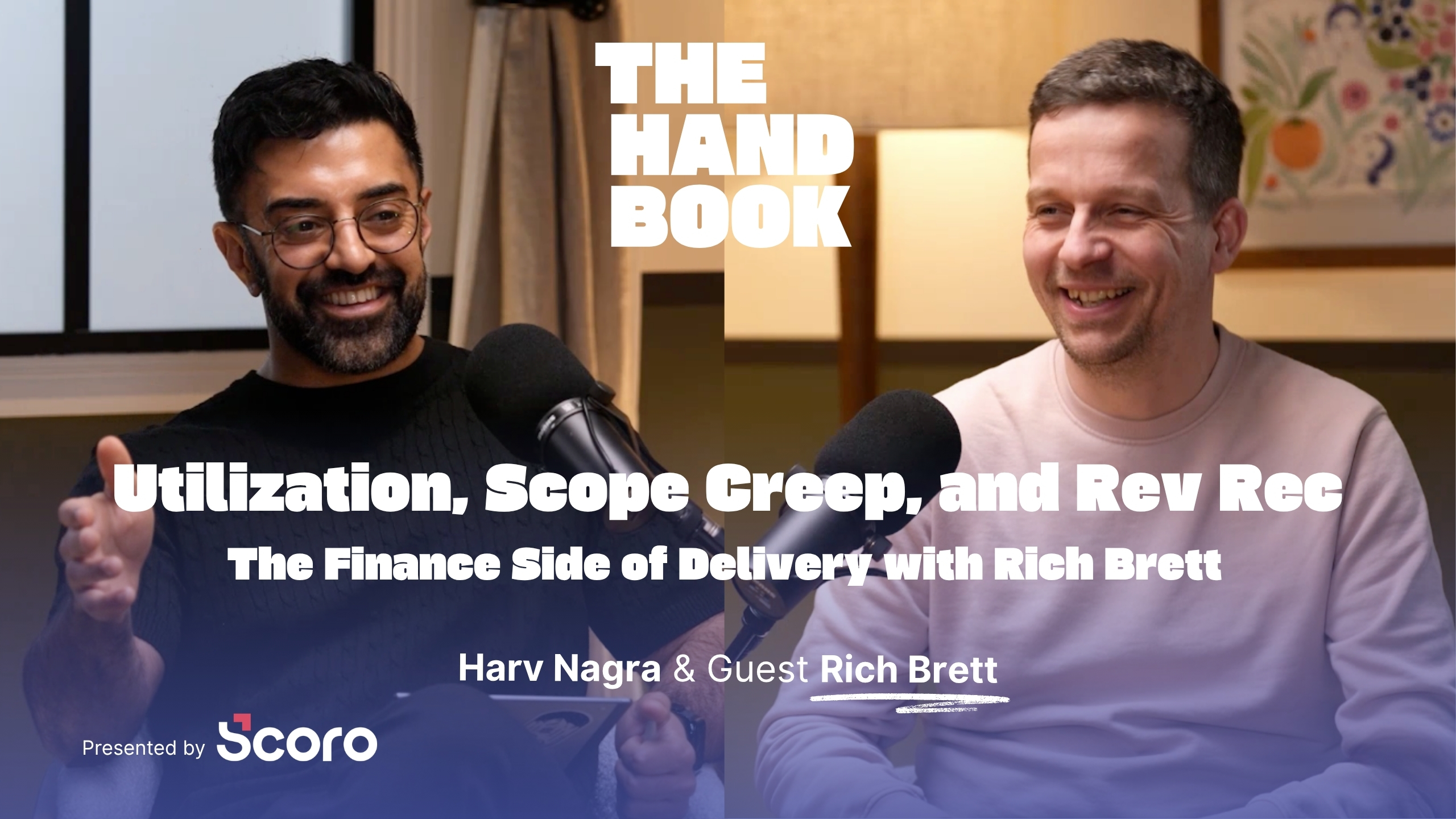
Harv Nagra, ops consultant and host of “The Handbook: The Operations Podcast,” learned this lesson the hard way:
We didn’t have a process around pitches at that point. I recall seeing the total time logged by the half-dozen folks working on one pitch and nearly falling off my chair. It was staggering. Turned out, we were pitching the client a Rolls-Royce when they had the budget for an e-scooter. We lost the pitch for being too expensive by a magnitude.

How to fix it:
Implement a pitch qualification gate. Harv recommends four questions before committing senior resources:
- What’s the strength of your relationship with the client?
- Do you have internal champions?
- Have you worked with this client before?
- What’s their budget?
Check your PSA tool for data on similar clients and projects. You’ll get a baseline for expected time, cost, and realistic revenue.
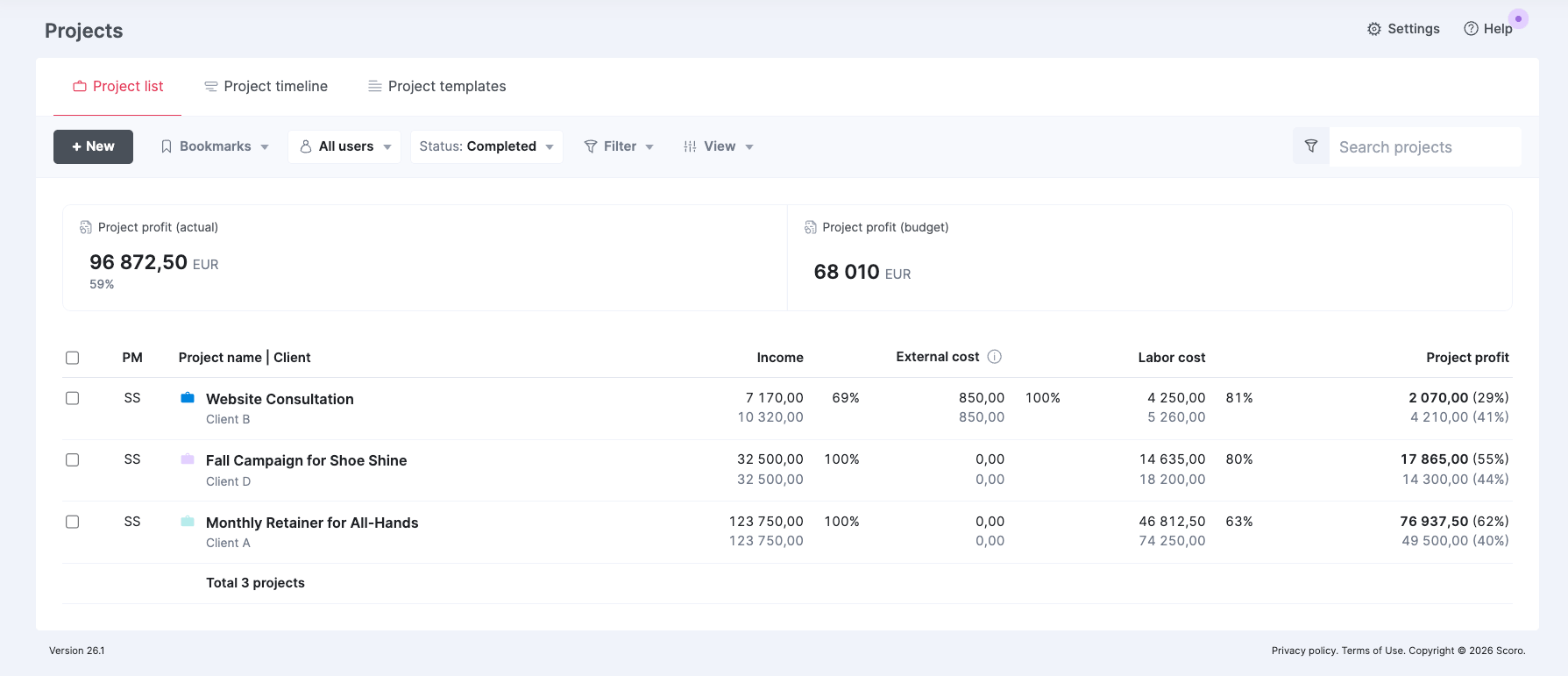
In Scoro, filter completed projects by type or client, then check the “Project profit” column. You’ll quickly see which kinds of work are worth chasing and which aren’t.
Top Tip
Listen to our podcast episode with Freia Muehlenbein, growth consultant, on how to put a successful pitch together .
2. Leaving “Grey Space” in your SOW
Vague Statements of Work (SOWs) are open invitations for free labor.
Why this happens: Assumptions. We assume clients understand how we work. When we don’t specify revision limits or feedback loops, “just one more thing” becomes the relationship’s default setting.
The Red Flag: Your SOW uses words like “Support,” “Ongoing,” or “TBD.”
Pilar Suquilvide, operations strategist at Your Agency COO, saw this play out across her team:
Clients were sold on broad outcomes during sales calls, like ‘X% traffic growth via X articles a month,’ without clarity on what that actually included. We didn’t specify revision rounds, communication cadence, or review processes.

She also mentioned that the delivery team wasn’t trained to set boundaries. So when clients asked for more, no one knew how to say no.
Team members worked 15-20% overtime on certain projects, with some running at twice the budgeted time. It was a direct hit to profitability and team morale.
How to fix it:
Spell out everything:
- Timelines and deliverables
- Revision limits
- Client responsibilities (tool access, feedback deadlines)
- Change request process and pricing for out-of-scope work
Walk clients through the SOW on a call. Don’t email it and hope they read it.
Pilar also trained her team on a “magic phrase” for out-of-scope requests: “That sounds like a great addition—would you like a quote for that?”
Before writing your next SOW, review what similar projects actually required.
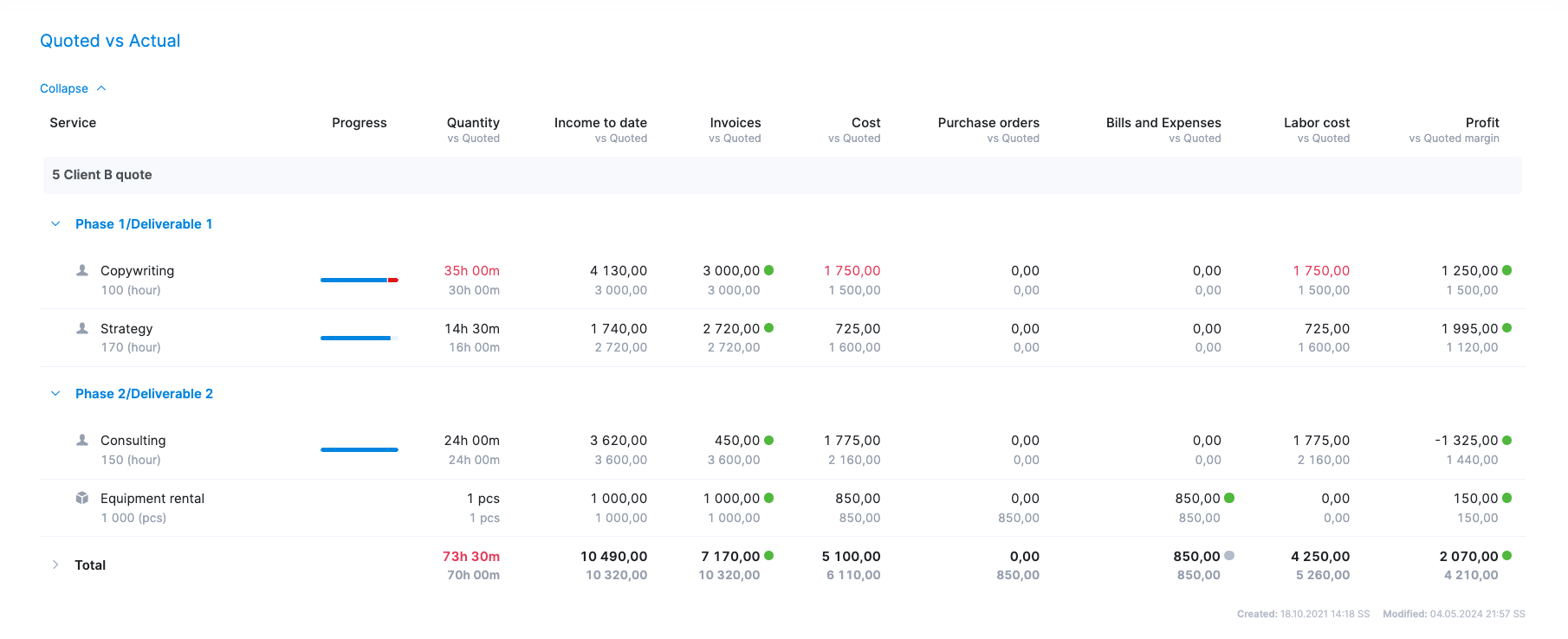
In Scoro, the Quoted vs. Actual table breaks down each service. So you can see which activities ran over and build that buffer into future scopes.
3. Chasing revenue that costs you money
Sales teams are often paid to hit top-line targets, not margin targets. The result: they sell “bespoke” projects your team isn’t built to deliver.
Why this happens: Misaligned incentives. Sales focuses on closing, not delivering. They sell custom work that creates “revenue” which actually drains cash because you’re hiring last-minute freelancers to put out fires.
The Red Flag: A signed contract for a service your team hasn’t performed in a year.
Kate Bridge, operations consultant and founder of Mission: Purple, has seen this pattern repeatedly:
One of the biggest mistakes I see in growing agencies is chasing revenue at any cost, with little or no thought to profitability. Sales teams are focused on hitting targets and often don’t know whether what they’re selling can be delivered profitably.

Kate adds that spontaneously taking on projects outside core offerings can eat 10–20% of margins.
How to fix it
Start with a leadership reset. Sales needs to understand that a $50k project with a 10% margin is worse than a $30k project with a 50% margin.
Kate trained her team to understand how their decisions impact project profitability, through realistic scoping, capacity awareness, and accountability.
Before signing any contract, check whether your team can actually deliver.
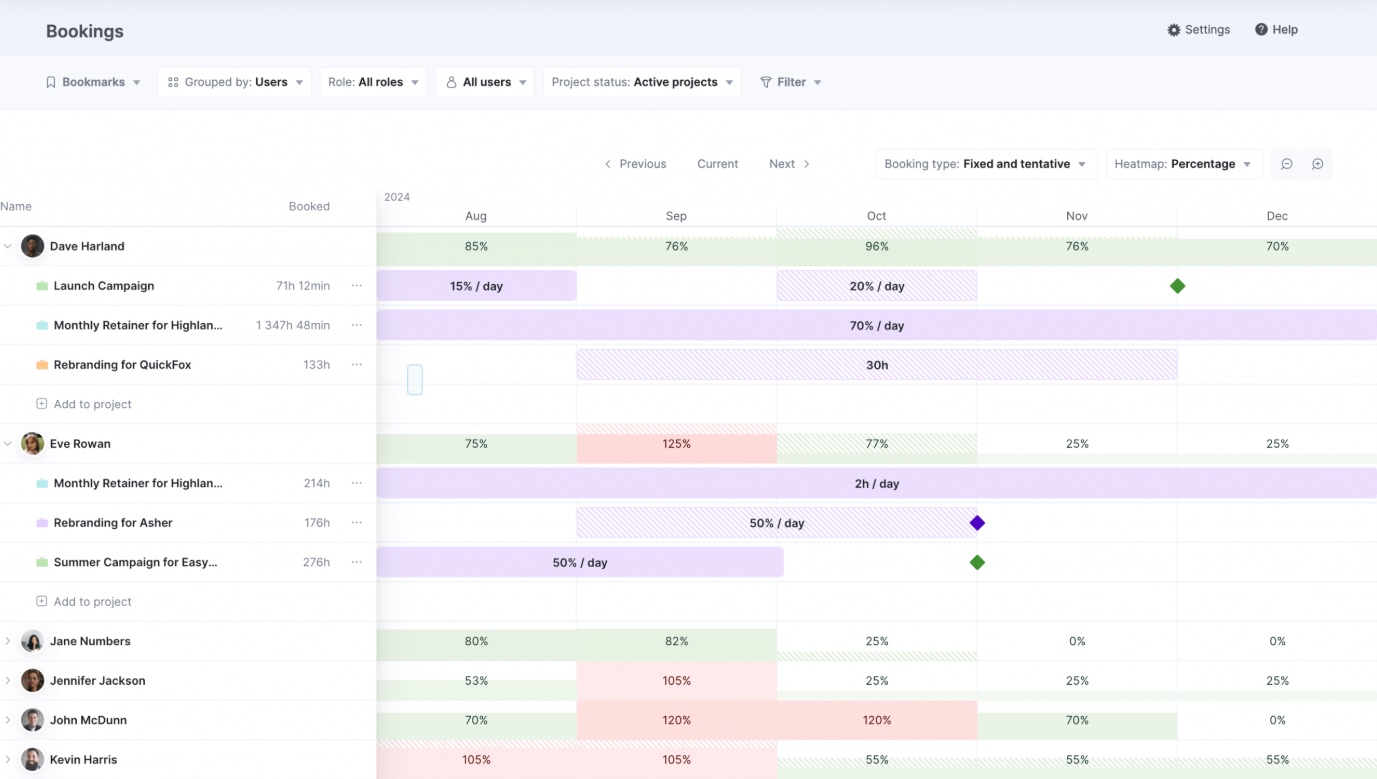
In Scoro, the Bookings module shows your teams utilization across your entire team/portfolio. So you can spot who’s maxed out and who has capacity before you commit.
4. Guessing the timeline to “get the deal done”
Shaving time off scoping is the fastest way to lose money.
Why this happens: An overemphasis on speed. Sales needs to close quickly, so teams quote based on “gut feel.” Once the contract is signed, the margin is gone forever.
The red flag: Hearing the phrase: “We’ll figure out the exact timeline during kickoff.”
Freia Muehlenbein, Agency Growth Advisor, warns that speed kills profitability:
An inaccurate scope will lead to an inaccurate quote. If we underprice, we’re setting ourselves up for squeezed margins. If we’re not good at scoping, we’ll have to deal with additional requirements and unexpected work.

How to fix it
Freia recommends involving your delivery team from the very beginning of the scoping and pricing process.
Set clear revenue figures and margin thresholds that every quote must hit. If a project can’t meet your margin threshold, don’t move forward.
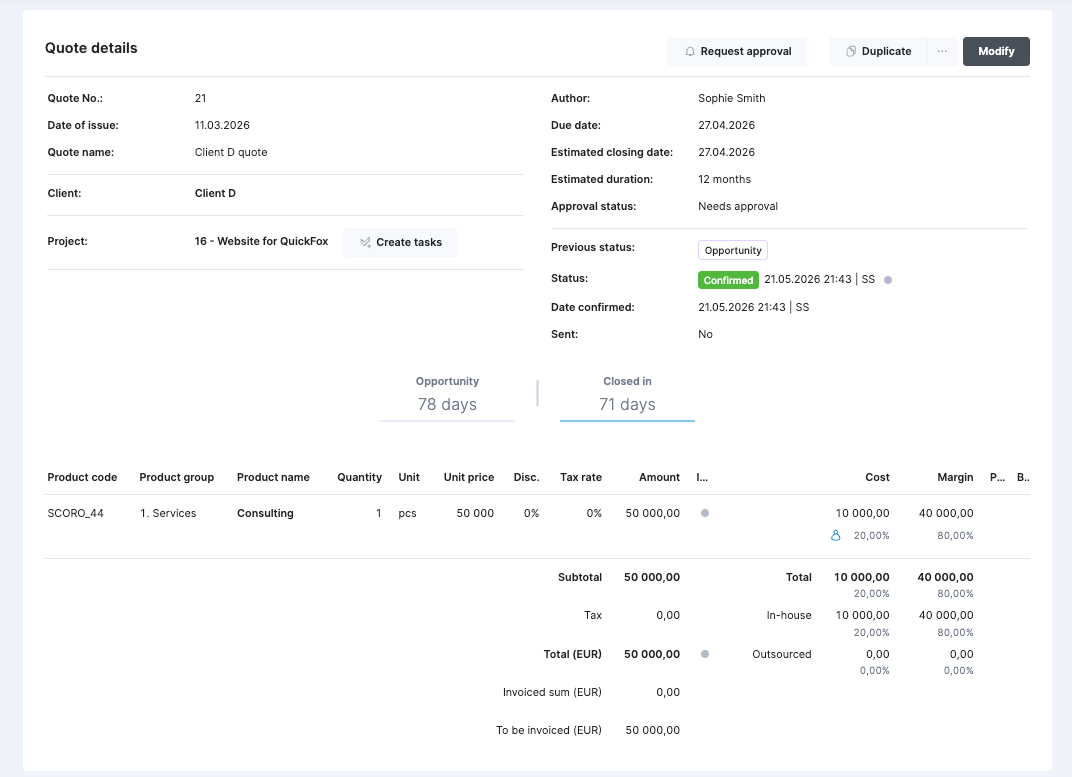
In Scoro, the quote module lets you build quotes with roles, rates, and delivery costs baked in. Allowing you to see the total cost and margin before you sign, not after.
5. Mistaking a “nod” for understanding
A nod in a meeting is not a commitment. People interpret “ASAP” and “Phase 1” differently based on their own stress levels and assumptions.
Why this happens: The “Capability Trap.” People fear looking incompetent, so they say “got it” even when confused. Documentation creates a false sense of security. You think because it’s written down, it’s understood.
The red flag: Everyone seems too confident. No one is asking questions.
Ali Newton-Temperley, COO at Unusual Group and author of “Agency Exits,” has seen this repeatedly:
One of the costliest mistakes I’ve seen in ops is assuming everyone understands. Ops leaders, myself included, often mistake agreement for understanding. Just because people nod along or say ‘got it’ doesn’t mean they actually see things the same way.

How to fix it
Run a check-in before kickoffs. Ask every person to restate (in their own words) exactly what they’re responsible for and when it’s due.
Then add key action items to your project management tool with clear owners and deadlines: first draft delivery, client feedback, final approval before launch.
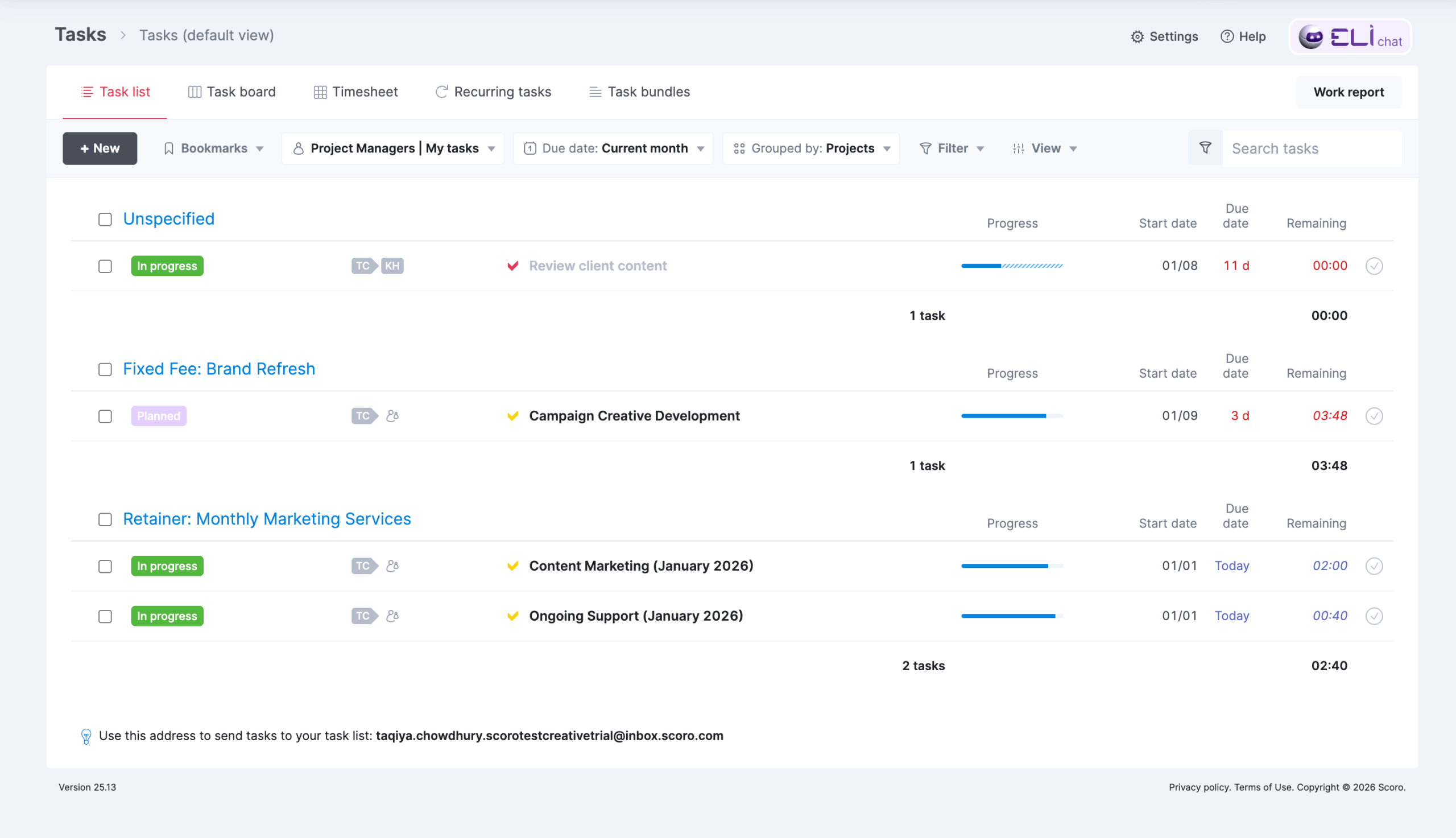
In Scoro, the Task List shows each task’s owner, status, due date, and remaining time at a glance. No chasing people for updates.
6. The “Ta-Da!” Delivery Model
Working in long stretches with minimal client contact until something is “finished” is a high-stakes gamble.
Why this happens: Perfectionism. Teams are scared to show “ugly” unfinished work. But without regular feedback loops, a one-degree drift early on becomes a total rebuild three weeks later.
The Red Flag: A project goes two weeks without a client feedback loop.
As Eilish Kennedy, COO at POWER SHIFTER, notes, those big “ta-da moments” rarely pay off:
We’ve seen small misalignments snowball into expensive rework. Timelines extend, frustration builds on both sides, and trust erodes. We like to use a sailing analogy: a one-degree drift early on becomes arriving at a completely different island weeks later.

How to fix it
Eilish recommends Rebuild your delivery model around two principles:
- Early and often: Clients see work as it evolves, so you fix issues before they compound
- Direct to expert: Remove the telephone game. Your SEO strategist talks to their head of marketing. Your designer connects with their brand manager.
Set these expectations during onboarding. Clients should know when they’ll receive drafts and who they’ll be in contact with.
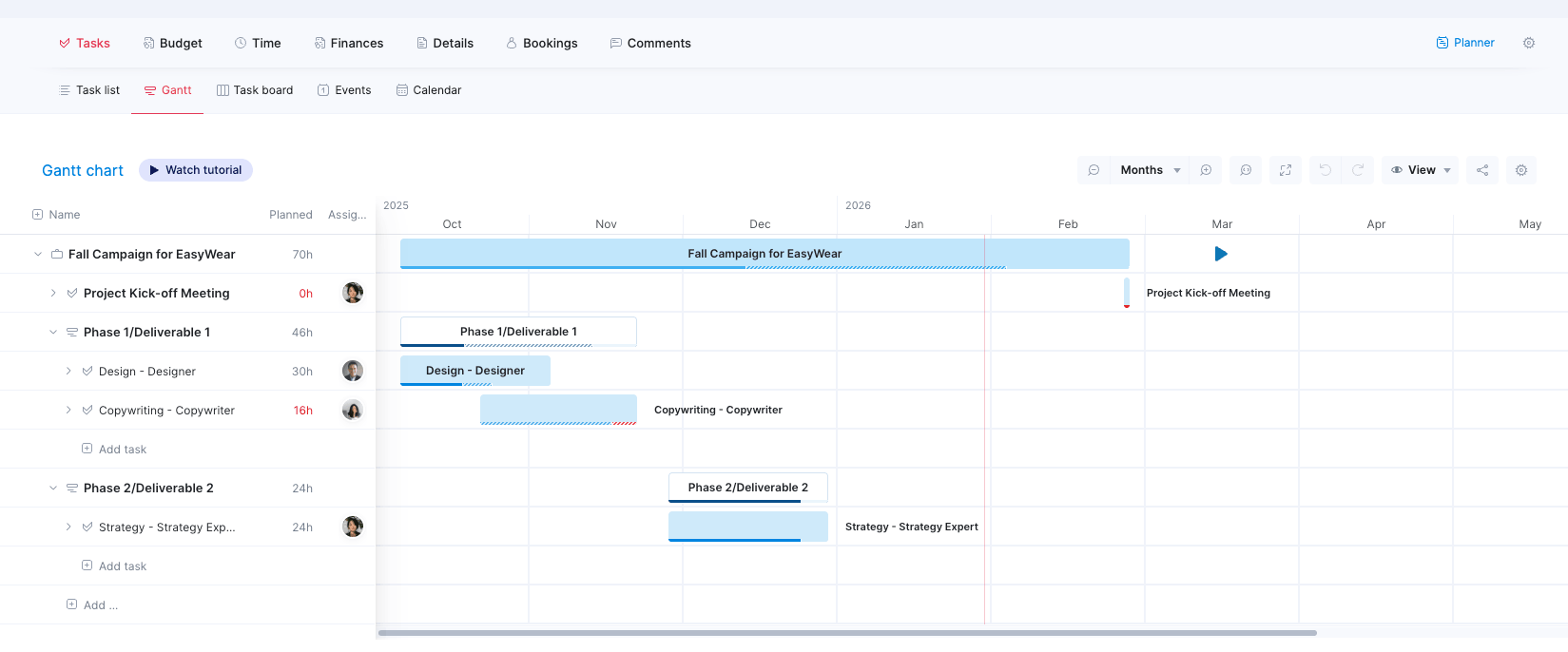
Reinforce the “early and often” mindset with Scoro’s shareable Gantt charts. Quickly show project timelines to clients, giving them visibility into progress without constant status meetings.
7. Ownership in the “Grey”
If two people are responsible for a task, nobody is.
Why this happens: Team “helpfulness.” We encourage teams to be scrappy and jump in. But when ownership isn’t explicit, tasks drift because everyone assumes someone else is handling the final sign-off.
The Red Flag: A 15-person Slack thread with no clear owner.
Zoë Blogg, managing director at Reboot, saw this leak 12% of a project’s margin:
It’s a classic agency trap. Agency teams are encouraged to move quickly, we solve problems on the fly, and it feels like we’re aligned because we’ve talked about it. But unless someone is explicitly accountable, things drift.

And the whole remote team was confused, with multiple people getting tagged in Slack threads and no one knowing who should respond.
How to fix it
Every project needs one “Throat to Choke.”
Assign one owner with clear contributors. Document it in your project tool. For a website redesign: one senior PM owns it. The designer handles mockups. The developer builds. The copywriter creates content. Each person knows their lane.
If your PM tool doesn’t make it easy to see exactly who is responsible for a deliverable, it’s time for a new one.
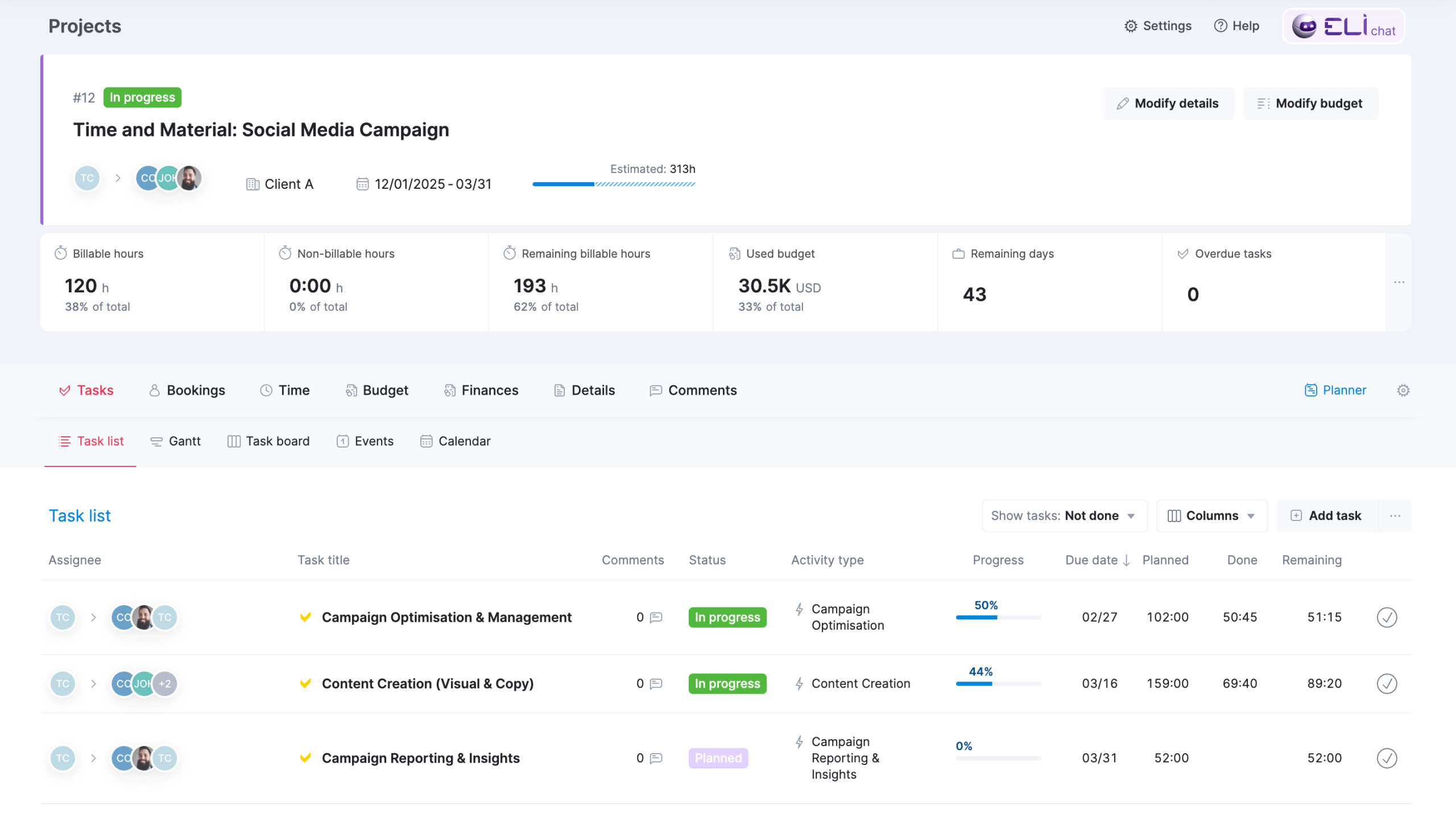
In Scoro, every task has one owner (or multiple if you want). Visible at a glance in the “Task list” view inside of your projects under “Assignee.”
8. Letting workarounds become your operating model
Scrappy fixes work for a team of 5; they break a team of 50.
Why this happens: We’re “too busy” to build a real process, so we use a spreadsheet hack or a manual “quick fix.” Over time, these undocumented shadow processes become the standard.
The red flag: “Only Sarah knows how to run that report.”
Amy Aitman, COO at ScaleVisible, saw this play out as her team grew:
Early on, that scrappiness is a superpower. But the workarounds that help you move fast in the beginning can quietly become liabilities later. We assumed these shortcuts were temporary—they weren’t. As we onboarded more people, those hidden, undocumented workflows led to inconsistencies, confusion, and rework.

How to fix it
Follow the “Rule of Two”: If you do a workaround twice, it’s a process. Document it.
Amy suggests a “go slow to grow fast” approach—documenting workflows during delivery rather than waiting for a break that never comes.
Map out the steps with your team, cut the friction, and link to necessary tools. Record a two-minute Loom video to walk through the “why” behind the “how.” This small upfront investment kills repetitive Slack questions for good.
Once a workflow is documented, turn it into a project template in Scoro. That way the next person doesn’t have to reinvent it.
If you need help with documenting and embedding your processes, check out this episode on this exact topic from “The Handbook” podcast:
9. Blindly trusting data over humans
Data tells you the what. Humans tell you the why.
Managing by reports alone is like following a map while ignoring the weather. You see the destination, but you miss the storm that caused the delay.
Why this happens: It’s faster to look at a dashboard than to have a conversation. But raw data without context leads you to price the next project incorrectly.
The red flag: Pricing new work based solely on past timesheets without talking to project leads.
Jack Rose, operations director at Everneu, points out the limits of this purely data-driven approach:
Issues or savings are rarely surfaced without discussion. If 25% of deliverables take twice as long as planned, your profit is eroded. You must ask: Did we deliver as planned? What would we change?”

How to fix it
Run monthly retrospectives. Sit with the data and the humans.
Ask: “The data says this took 40 hours. Was that because the task was hard, or because the client brief was a mess?” Use these insights to update your quote templates.
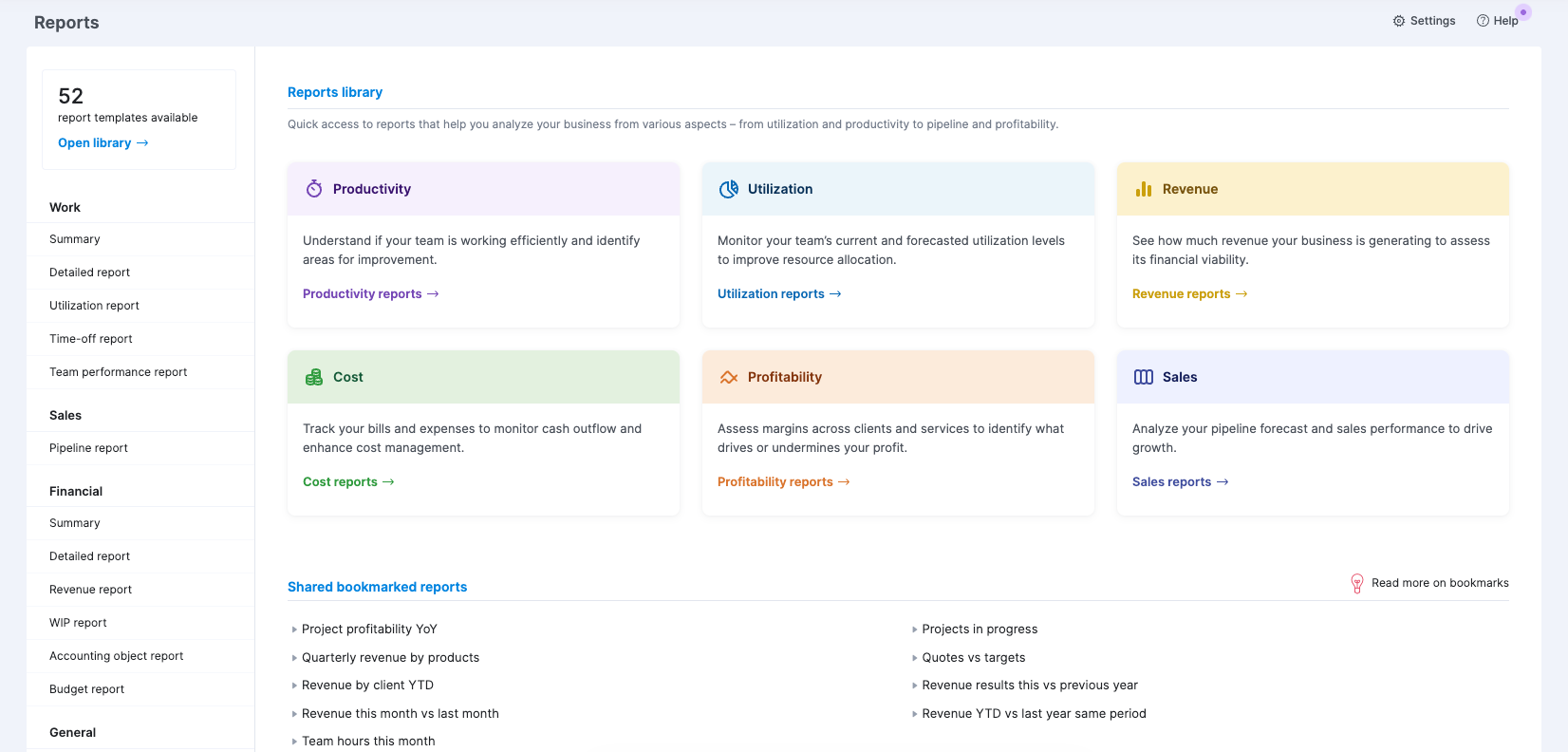
Scoro’s Reports library surfaces the numbers. 52 report templates cover productivity, utilization, profitability, and more.
But remember, the report is a starting point, not the answer. The conversation is what turns data into better estimates.
10. Launching tools without launching the narrative
The mistake isn’t choosing the wrong tool. It’s underestimating how much clarity, ownership, and cross-team sponsorship it takes to make any tool actually stick.
Why this happens: Ops teams are wired to solve problems fast. New tools feel like quick wins, so we rush to implementation without doing the unglamorous work of alignment, communication, and behavior change.
The red flag: Someone says, “Let’s just get everyone into the system and figure it out later.”
Anish Thakkar, director of operations at The Sasha Group, experienced this firsthand during a new rollout:
We had the vision for transformation, but not the structure. There was no clear buy-in from department leads, no change management plan, and no consistent training cadence. What felt like a simple software upgrade turned into a stalled rollout that cost time, trust, and momentum. Instead of gaining efficiency, we created 20–30% more manual work.

The rollout fragmented almost immediately. Teams adopted the tool inconsistently, data quality dropped, and leadership lost confidence in reporting. They spent almost an entire quarter unwinding bad setup and rebuilding properly.
How to fix it
Don’t launch the tool until you’ve launched the narrative.
Before rollout, everyone needs to understand:
- The problem you’re solving
- What’s changing in their daily workflow
- How you’ll support them through the transition
Anish recommends building role-specific workflows instead of one massive system, and anchoring everything in a clear “why” that shows each team how the tool makes their day-to-day easier.
As he puts it: “Alignment and clarity will always create more impact than features or functionality.”
Top Tip
Take a look at our 15 expert tips for implementing PSA software and learn how to avoid the most common pitfalls.
The common thread
Every COO/Ops leader I spoke with told me some version of the same story: they didn’t see the problem until it had already cost them.
Margins don’t disappear in dramatic failures. They evaporate in “quick pitches” that take 40 hours. In “small favors” that become expectations. In “temporary” workarounds that run your company three years later.
The fix isn’t to work harder. It’s to see the erosion for what it is.
Open Slack right now. Find the thread that’s been going in circles all week. That’s not a communication problem. That’s a margin leak with a paper trail.
Fix that one first. Then move on to the next (your margins will thank you).
Want more expert ops advice?
Subscribe to Harv Nagra’s “The Handbook: The Operations Podcast” for practical insights from operations leaders.