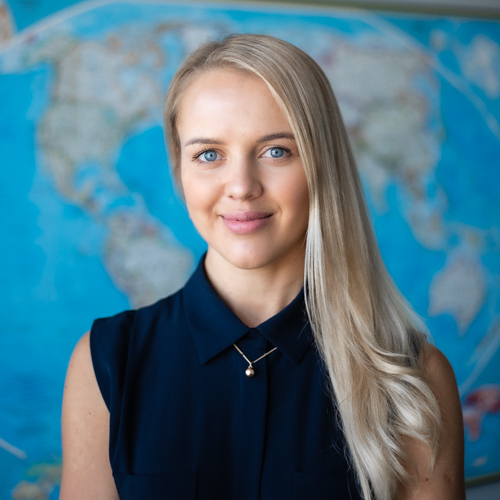







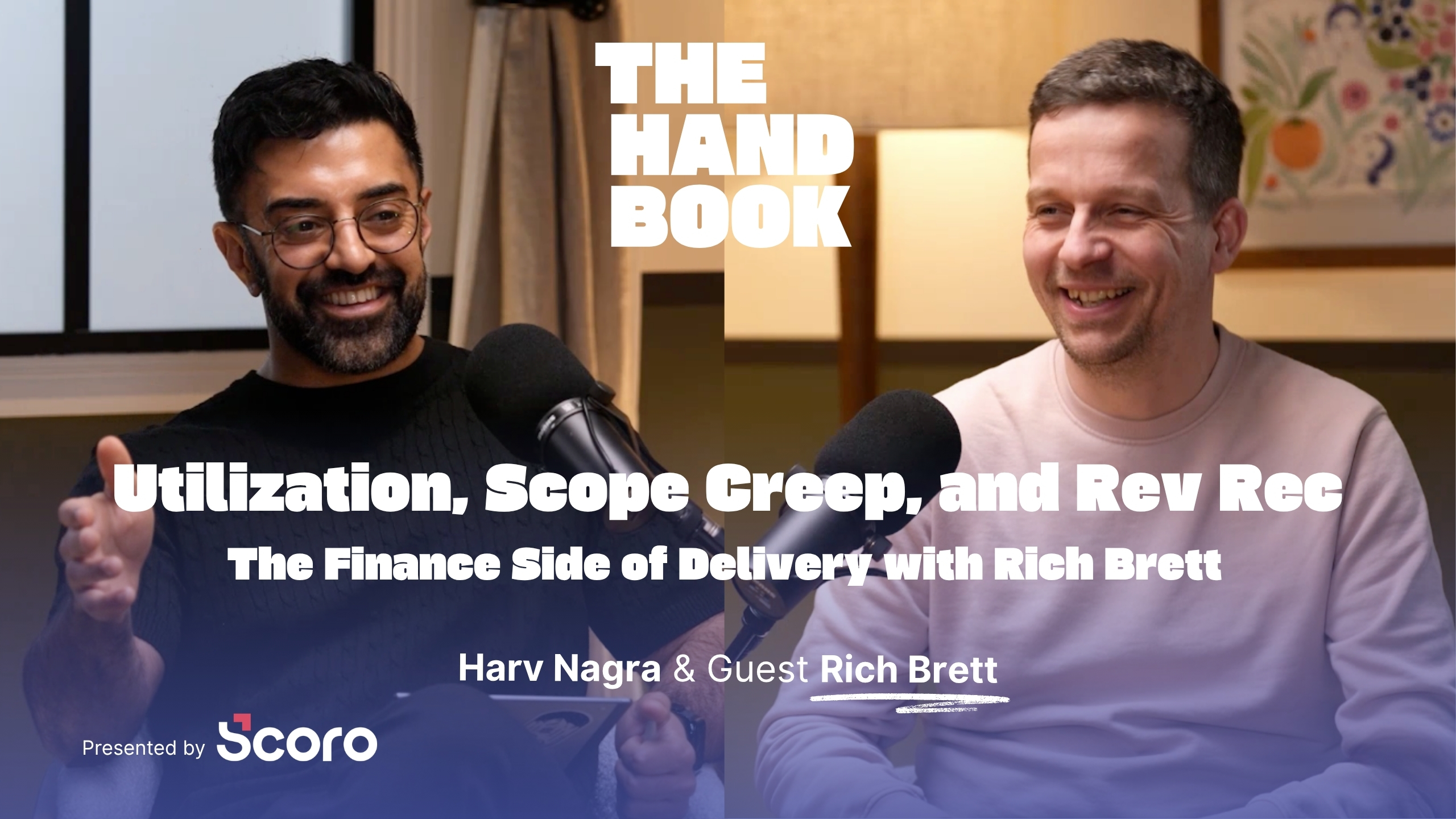
More than 10 years at one company can take you through quite a few different roles. For Janeli, that journey has gone from Training Specialist to Quality Assurance, Engineering Management, and now leading Scoro’s Software Development organization.
Today, as Head of Software Development, Janeli is responsible for five development teams and plays a key role in shaping how we build and deliver software at Scoro.
We sat down with her to talk about her career journey, what has kept her at Scoro for more than a decade, how our Software Development teams work today, and what makes this an exciting time to be part of Engineering.
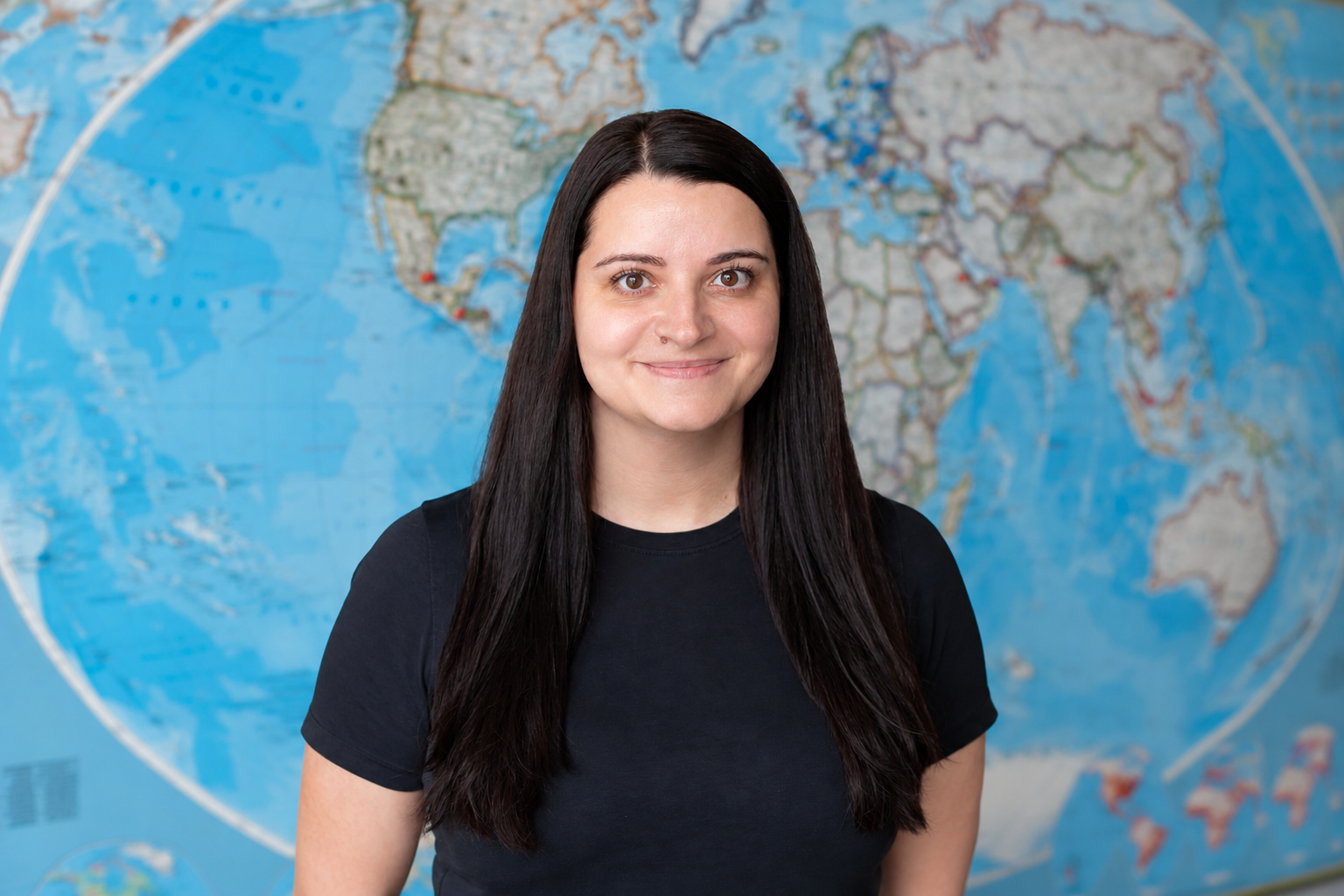
1. You’ve been at Scoro for more than a decade and have had quite a journey here. Can you take us through it?
I joined Scoro in 2016 as a Training Specialist, but within a few months, my role evolved into Customer Onboarding Specialist as I started handling a wider range of customer communication.
Less than a year into my time at Scoro, the company was looking for a QA Engineer. The People Operations Manager who had originally hired me remembered that I had previous experience in software testing and suggested I consider the role. I made the move into QA and, by the end of 2017, became QA Team Lead.
A few years later, I stepped into the role of Head of Quality Assurance and grew the QA team from two people to eight. Over time, I found myself looking beyond Quality and thinking more broadly about how our Engineering teams worked as a whole. That led me to an Engineering Manager role, where I became responsible for both Quality and Software Engineers within our Core Product area.
My most recent step came this year, when I became Head of Software Development. Today, I’m responsible for our software development organization, which consists of five development teams.
Looking back, I’ve usually started taking on new responsibilities before my role officially changed. The new title often came later, once I was already doing much of the work.
2. What did you study and do before joining Scoro?
As a kid, I wanted to become an accountant because I’ve always enjoyed working with numbers and bringing structure to what I do. Math was my favourite subject at school, so that direction felt quite natural. But when it came time to choose what to study, I went in a completely different direction.
I completed my bachelor’s degree in German Language and Literature at the University of Tartu, then went on to pursue two master’s degrees simultaneously: Written Translation and Teaching German and English. I never really planned to become a teacher, but the studies helped me develop skills like communication, presenting, and leading people, which have turned out to be very useful throughout my career.
After university, I moved to Tallinn and started working for a digital company, focusing on the German market. That role also gave me my first work-related exposure to HTML and CSS and sparked some interest in the more technical side of things.
After a few different roles and companies, I joined a software company as a Customer Support Specialist in 2013 and later moved into software testing. I was eventually headhunted by Scoro for a Customer Support role. By then, I had already moved on from that role and was looking for something different, which is how the opportunity to join Scoro’s Onboarding team came up.
3. You started at Scoro in a customer-facing role before moving into QA and eventually Software Development. What sparked your interest in the technical side of the company?
When I worked in Customer Support, I was never satisfied with simply acting as a translator between customers and engineers. I wanted to get my hands dirty too, investigate the issues I noticed, and understand why things behaved the way they did.
At Scoro, I’ve always been open to opportunities to try something outside my immediate job description, especially when I could see a better way of doing something. Moving into QA allowed me to get closer to the technical side of the product and understand how things actually work.
I also started building a stronger technical foundation. I taught myself a lot along the way, but also took university e-courses in programming and other courses to fill in the gaps in a more structured way.
There’s actually quite a bit of overlap between the customer-facing role I started with and what I do today. Both are ultimately about helping customers work better. The difference is that in Product Engineering, you can shape the product itself and see the impact more directly.
4. What does your role as Head of Software Development look like today?
As Head of Software Development, my main focus is building an effective engineering organization and creating the right conditions for our teams to deliver high-quality software efficiently and predictably.
I work most closely with our Engineering Managers and development teams. My responsibilities range from team structure, hiring, and leadership development to improving how we plan, develop, and deliver software.
A big part of my role is also looking for bottlenecks and opportunities to improve how we work. That includes exploring how AI-assisted and agentic development can genuinely make our teams more effective.
I also work closely with Product and Engineering leadership to make sure our engineering capabilities and priorities support both our product direction and wider business goals.
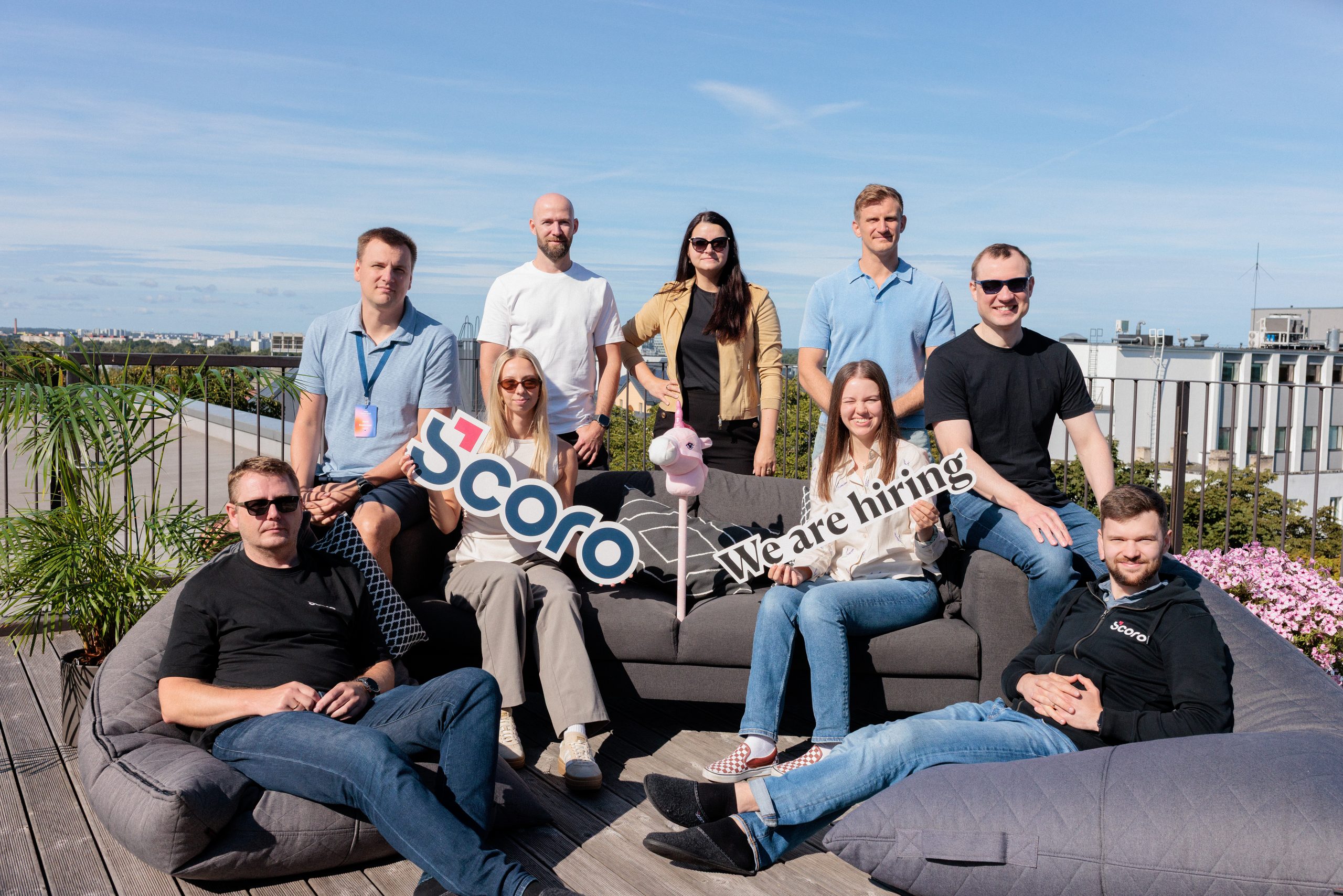
5. How is Software Development organised at Scoro, and how do the teams work together?
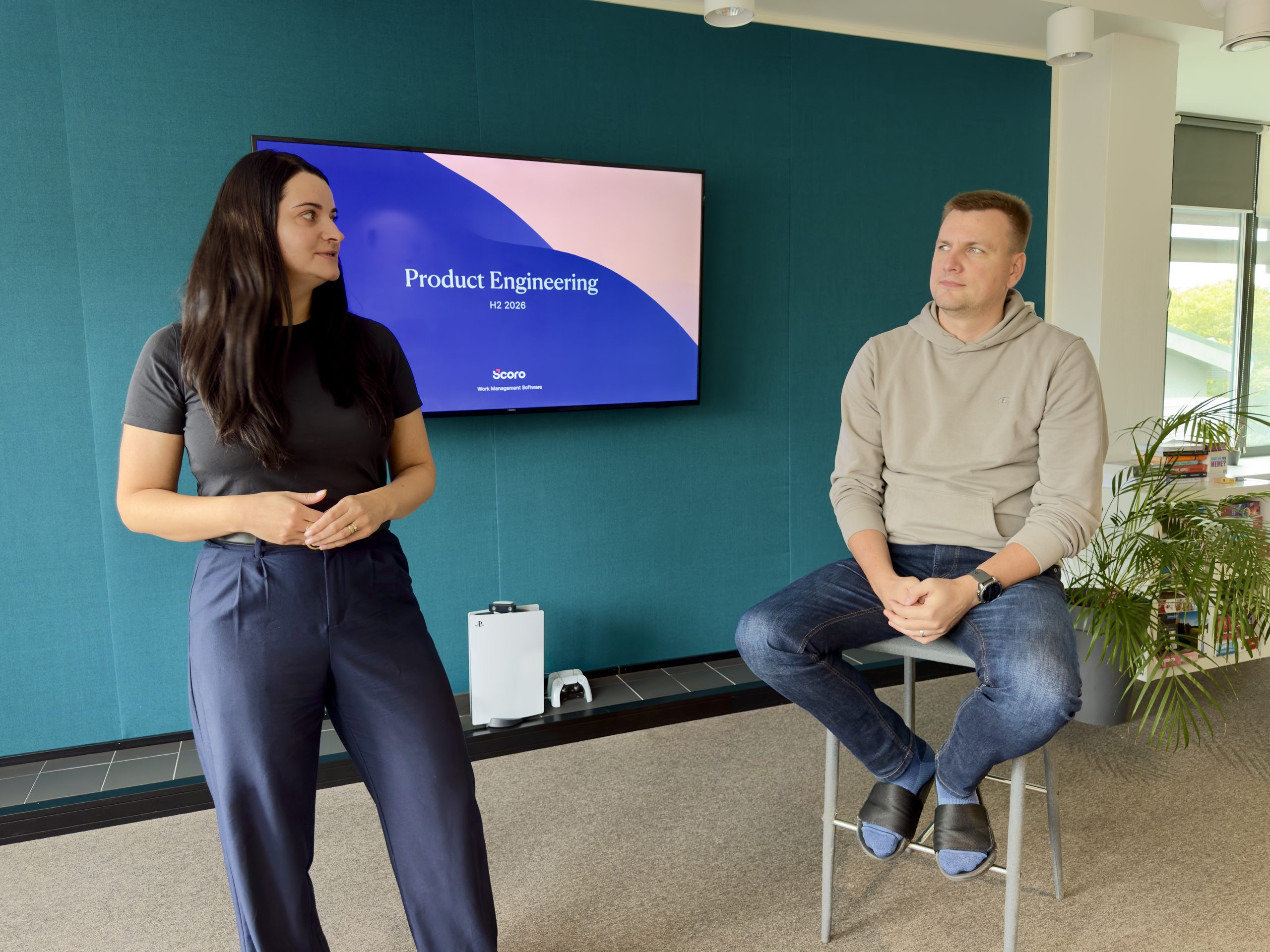
Engineering at Scoro is organised into three areas: Product Engineering, Platform Engineering, and Engineering Operations. I’m responsible for Product Engineering, which currently consists of five software development teams.
Each team is led by an Engineering Manager and works closely with a Product Manager. The teams each own a specific area of the product: Ecosystem, Essentials, Money, Time, and Customer Journey.
While every team has its own focus and responsibilities, there’s also plenty of collaboration whenever projects overlap or changes affect multiple areas of the product.
6. What makes Scoro’s Engineering division an exciting place to work right now?
I think what makes Engineering especially exciting right now is that there’s a lot happening at the same time, and still plenty of room to shape not only what we build, but also how we work.
We’re continuously improving how we develop and deliver software, from our team structures and engineering practices to how we use data to understand our performance. At the same time, AI-assisted and agentic development is changing how software is built, and we’re figuring out where these tools can genuinely make us more effective rather than adopting them just because everyone is talking about them.
We’re also in the final stages of several major engineering initiatives that have taken years of work to get to where they are today. Seeing those efforts come together is exciting, but it also raises the question of what comes next and what the next big challenge will be.
Ultimately, we’re building a product that helps other businesses succeed and make better use of their time. That makes the technical challenges we solve meaningful because improvements in how we build software translate into a better product for our customers.

7. Beyond technical experience, what skills or mindsets do you look for in someone joining your team?
Beyond technical experience, I look a lot at whether someone’s mindset matches the way we work at Scoro.
Being pragmatic and easy to work with matters a lot. I value people who bring structure to their work and think carefully about how they use both their own time and the time of others.
Teamwork is equally important. Strong individual skills are valuable, but we achieve much more when people communicate openly, support each other, and work towards a shared goal.
I also look for curiosity and a willingness to challenge how things are done. We have ambitious goals, so being open to new ideas and continuously looking for better ways of working is important.
Finally, I value people who set a high bar for themselves. That doesn’t mean aiming for perfection, but caring about the quality of your work, taking ownership, and wanting to keep improving.
8. You’ve been at Scoro for more than a decade. What has kept you here all this time?
One of the biggest reasons is that no one really stops you from trying new things. Quite the opposite, you’re encouraged to explore new ideas and ways of working. I’ve never felt like I’ve hit a wall in terms of growth.
The different roles and responsibilities I’ve taken on over the years have also meant that I haven’t had much chance to get too comfortable. There has always been something new to learn, solve, or take responsibility for, which has kept the work interesting.
Just as important are the people. Over the years, I’ve worked with so many wonderful people and made a lot of friends along the way. Even when our career paths have taken us in different directions, we still meet up and enjoy each other’s company.
I’ve also been very lucky with the managers I’ve had. Amusingly, I’ve actually been involved in hiring several of them, so I can say I’ve played a part in choosing my own boss! Having strong people around you, both as colleagues and leaders, makes a huge difference in wanting to stay and continue growing with a company.
9. Looking back over those 10+ years, what are some moments that stand out the most?
There are quite a few moments that stand out, and many of my favourites are connected to the people I’ve worked with and the experiences we’ve shared.
One thing that definitely comes to mind is the surprise pranks we’ve organised over the years for team members’ birthdays, weddings, Scoro anniversaries, and other special occasions. Some became quite elaborate, and coming up with the ideas and putting everything together as a team created some really fun memories outside our day-to-day work.
Another moment that has stayed with me was helping one of my team members grow from a mid-level role into a Senior position. At first, she was convinced she had already reached her limit and that what I was asking from her simply wasn’t possible. We agreed on what needed to change, and she left the conversation determined to prove me wrong.
A few months later, the difference was obvious, and she became a Senior soon after. When she later moved to a different manager, she gave me homemade cookies with a card thanking me for supporting her and helping her grow. Seeing someone push past a limit they had set for themselves is one of the most rewarding parts of being a manager.
If you want to be part of our journey, check out our Open Roles and send your application today. If you cannot find a suitable position, save your interest on our Connect page, and we will contact you when a job that matches your profile opens.